Vase Drawing: Step-by-Step Tutorial & Easy Ideas
Want to draw a vase that actually looks right? Start with a simple center with petal or leaf shapes around it and build from there. This page covers the full process — nine steps from first line to finished drawing — followed by vase drawing ideas in every style: easy, cute, realistic, and a few you probably haven't tried.
- Difficulty Easy
- Time ~12 min
- Tools Pencil, eraser, paper
- Starts with a simple center with petal or leaf shapes around it
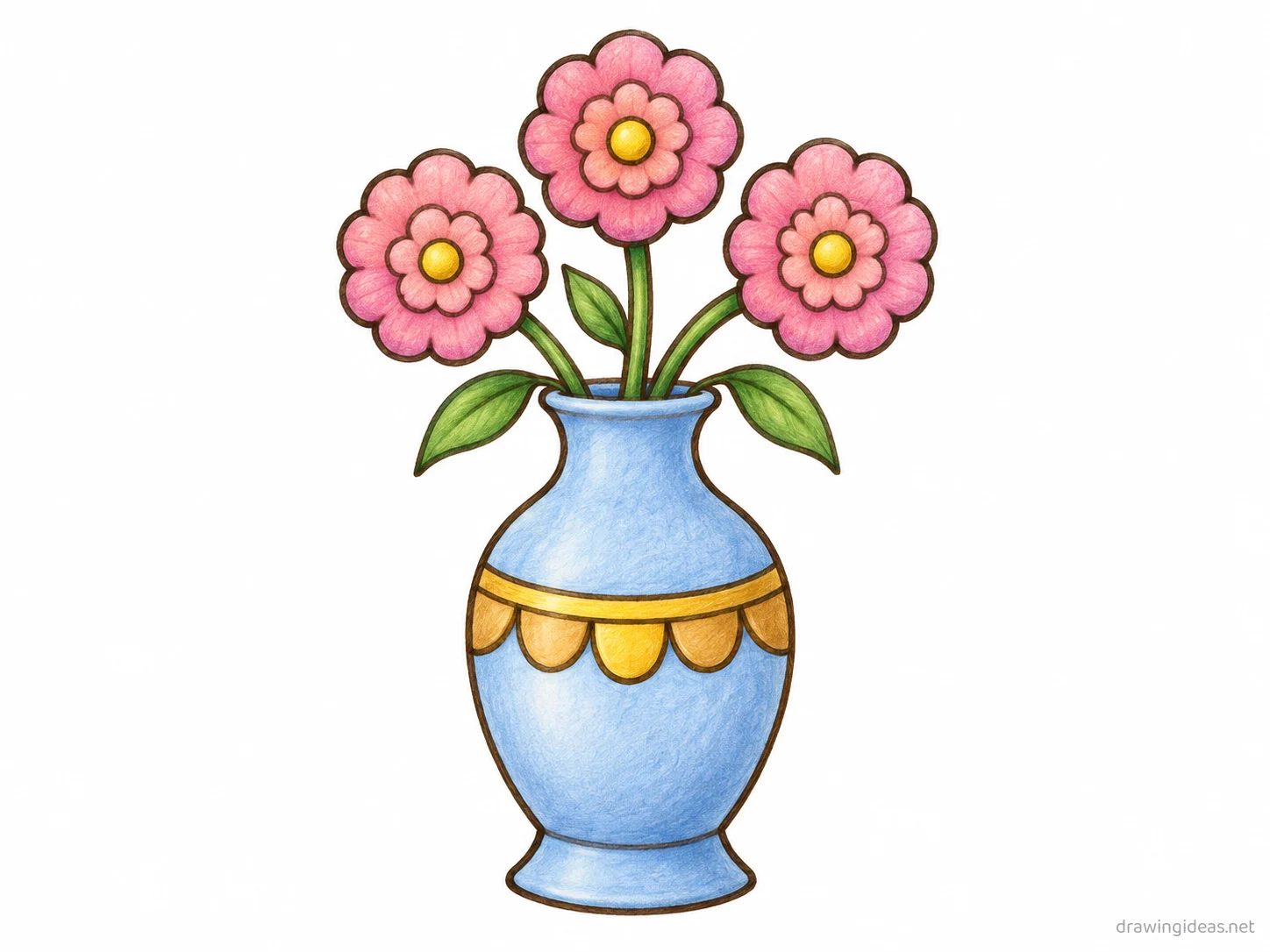
How to Draw a Vase Step by Step
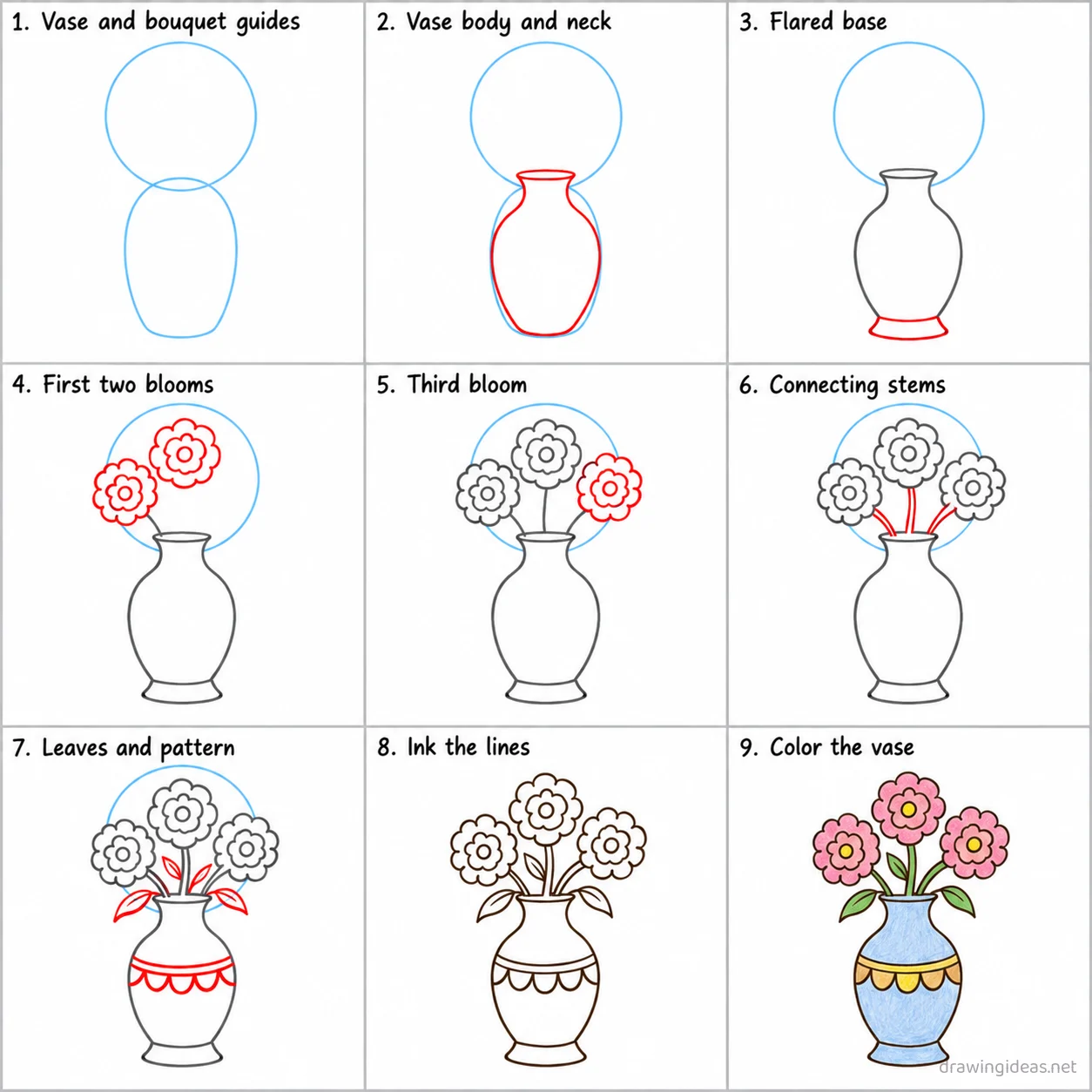
Step 1 of 9
Vase and bouquet guides
Draw a tall light rounded shape in the lower middle of the page for the vase, then a wide light circle above it for the flowers.
-
Vase and bouquet guides
Draw a tall light rounded shape in the lower middle of the page for the vase, then a wide light circle above it for the flowers.
-
Vase body and neck
Trace the vase body on the rounded guide, then add a narrower neck rising to the opening.
-
Flared base
Add a small flared foot at the very bottom of the vase.
-
First two blooms
Draw two round layered blooms above the left and right sides of the vase opening.
-
Third bloom
Add a third round layered bloom directly above the opening, taller than the other two.
-
Connecting stems
Draw three curved stems connecting each bloom down to the vase neck opening.
-
Leaves and pattern
Add a few pointed leaves branching off the stems, then a curved band pattern around the vase body.
-
Ink the lines
Go over every kept line with dark ink, then erase the light vase shape and flower circle guides.
-
Color the vase
Fill the vase pale blue, the blooms pink, the leaves and stems green, and the pattern gold.
Vase Drawing Ideas to Try Next
Once the basic vase clicks, run it through these variations — each one practices a different skill while staying on a subject you already know.
-
Vase in a simple vase
Add a basic vessel and you've turned a flower doodle into a still life.
-
A bee or butterfly visiting your vase
One tiny pollinator turns a plant study into a scene.
-
Line-art vase tattoo design
Single-weight clean outline, no shading — minimalist flash style.
-
A vase growth cycle strip
Bud, half-open, full bloom in three panels — repetition with a story built in.
-
A vase wreath
Repeat small versions in a circle guideline — the highest-value use of one flower you've learned.
-
A single vase study
One bloom, centered, drawn slowly from life or photo — the classic botanical exercise that always ends frameable.
-
A vase border or corner piece
Grow the vase along a page edge or corner — perfect for journals, cards, and letters.
-
Pressed-flower style flat vase
Draw it perfectly flat and symmetrical like a pressed specimen, with a handwritten label beneath.
Tips for Better Vase Drawings
- Nature is never symmetrical — if your flower looks stiff, rotate a few petals, vary their widths, and let one droop. Imperfect petals read as alive.
- Draw petals from the center outward, letting each one overlap a neighbor. Overlap is what separates a flower from a pinwheel.
Not feeling the vase today?
Let the generator pick your next subject — filtered by mood and difficulty.
🎲 Random Drawing GeneratorVase Drawing FAQ
What is the easiest way to draw a vase?
Start with a simple center with petal or leaf shapes around it, keeping your lines light. Refine the outline, add the defining details, then erase the construction shapes. The nine-step method above breaks this down — most people get a recognizable vase on their very first try with it.
How long does a vase drawing take?
A simple vase drawing takes about 12 minutes following this tutorial. A quick doodle version can be done in two or three minutes, while a detailed, fully-shaded study might take an hour. Speed comes with repetition — the second attempt is always faster than the first.
What supplies do I need for vase drawings?
Just a pencil, an eraser, and any paper. An HB pencil for construction lines and a 2B for final outlines is a nice upgrade, and colored pencils or markers finish it off — but nothing on this page requires special supplies.
Is a vase easy to draw for beginners?
Yes — the vase is one of the friendlier subjects for beginners, and this method was written for first-timers. Kids can follow the same steps; just expect wobblier lines and more charm.