Trippy Mushroom Drawing: Step-by-Step Tutorial & Easy Ideas
Trippy Mushroom drawings are one of the most-loved sketching subjects, and for good reason — the basic version comes together from light guidelines in just a few minutes. Follow the nine steps below to get the foundations right, then browse the ideas list for your next trippy mushroom sketch.
- Difficulty Medium
- Time ~20 min
- Tools Pencil, eraser, paper
- Starts with light guidelines
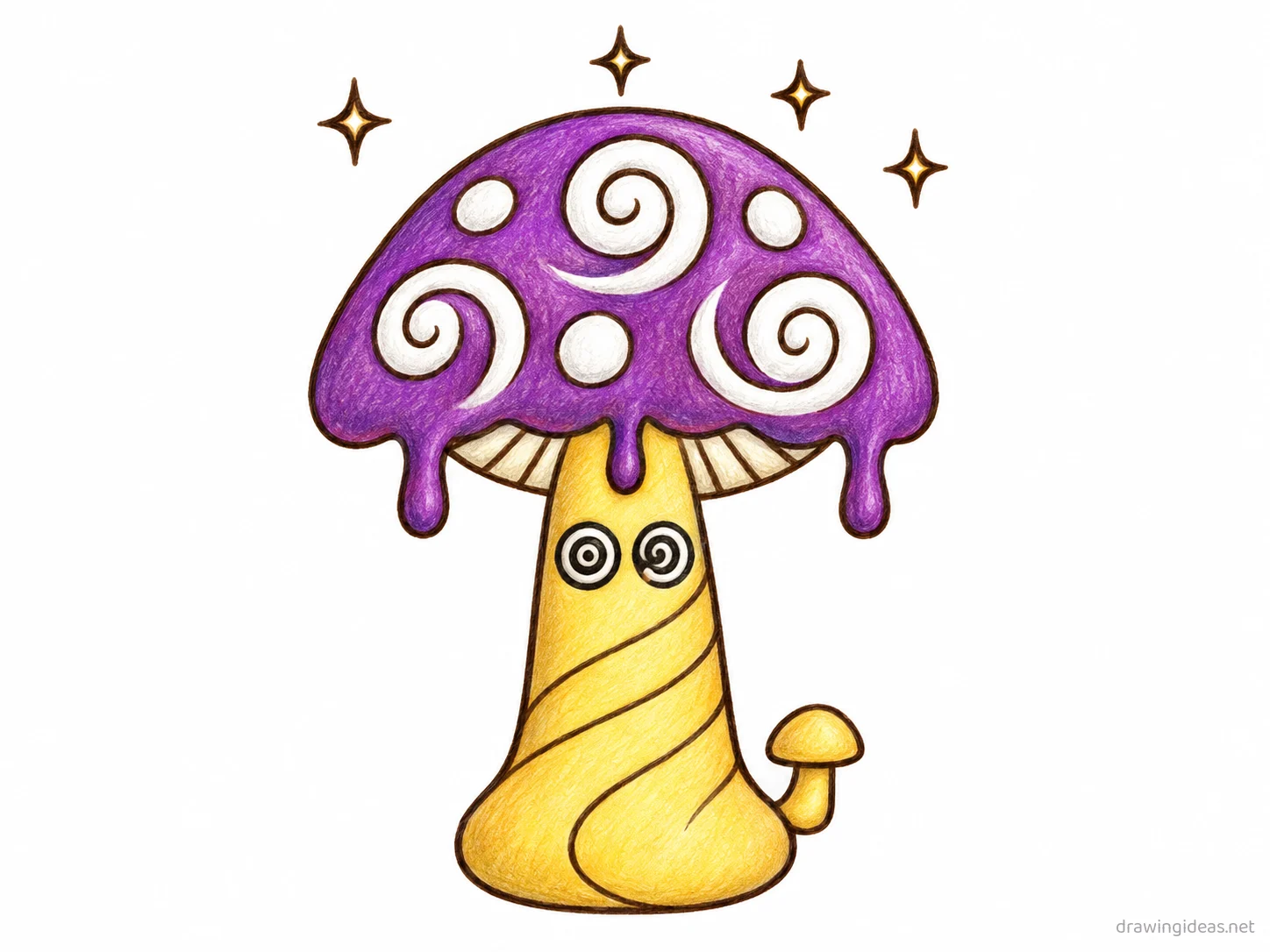
How to Draw a Trippy Mushroom Step by Step
Step 1 of 9
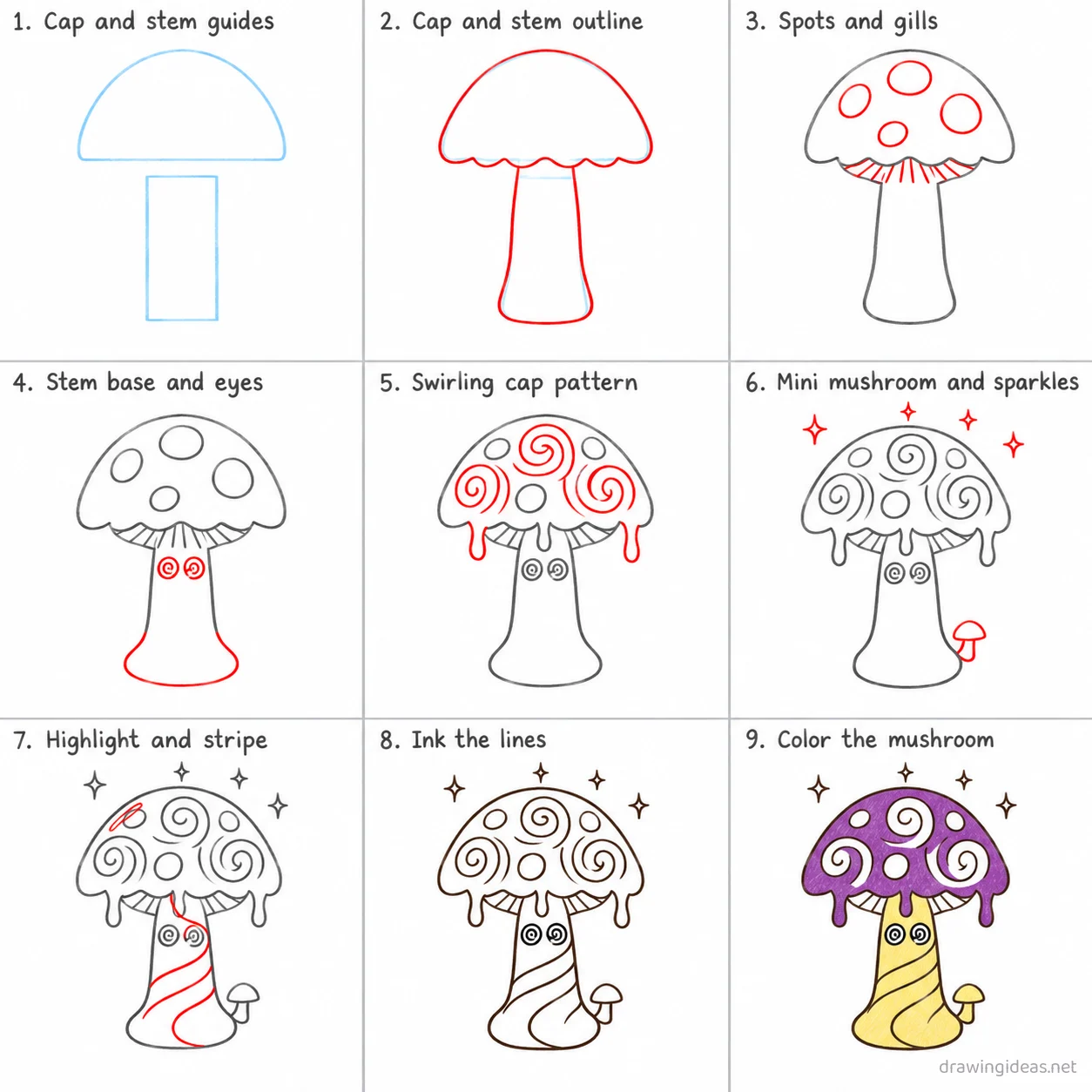
Cap and stem guides
Draw a light dome shape in the upper middle for the cap, then a light rectangle guide below it for the stem.
-
Cap and stem guides
Draw a light dome shape in the upper middle for the cap, then a light rectangle guide below it for the stem.
-
Cap and stem outline
Trace a wavy scalloped edge around the dome for the cap outline, then trace a slightly bulging outline over the stem guide.
-
Spots and gills
Add four rounded spots scattered across the cap, then short lines fanning from the stem top along the underside of the cap rim.
-
Stem base and eyes
Flare the bottom of the stem into a wide rounded foot, then draw two spiral swirl eyes near the top of the stem.
-
Swirling cap pattern
Draw spiral swirl lines across the cap surface between the spots, then add a few melting drip shapes hanging from the cap edge.
-
Mini mushroom and sparkles
Draw a tiny mushroom growing beside the base, then scatter small star sparkles around the top of the cap.
-
Highlight and stripe
Add a curved shine line on the upper left of the cap, then a spiral stripe winding down the length of the stem.
-
Ink the lines
Go over every kept line with dark ink, then erase the light dome and rectangle guides.
-
Color the mushroom
Fill the cap purple, the spots white, the stem pale yellow, and the swirl eyes black and white.
Trippy Mushroom Drawing Ideas to Try Next
Once the basic trippy mushroom clicks, run it through these variations — each one practices a different skill while staying on a subject you already know.
-
A practice grid of trippy mushroom studies
Divide the page into six boxes and repeat the exercise with one variation each — visible progress on a single page.
-
A before/after trippy mushroom comparison
Draw the same subject with and without the technique side by side — proof of what you've learned.
-
Apply trippy mushroom to a simple still life
Use the technique on a mug and a book from your desk — real objects make practice stick.
-
A timed trippy mushroom challenge
The same exercise at 5 minutes, 1 minute, and 30 seconds — speed reveals what you truly know.
Tips for Better Trippy Mushroom Drawings
- Change exactly one variable per repetition — new angle, new size, new subject. That’s how practice compounds into skill.
- Slow is smooth and smooth is fast: technique practice done deliberately beats ten rushed repetitions.
Not feeling the trippy mushroom today?
Let the generator pick your next subject — filtered by mood and difficulty.
🎲 Random Drawing GeneratorTrippy Mushroom Drawing FAQ
What is the easiest way to draw a trippy mushroom?
Start with light guidelines, keeping your lines light. Refine the outline, add the defining details, then erase the construction shapes. The nine-step method above breaks this down — most people get a recognizable trippy mushroom on their very first try with it.
How long does a trippy mushroom drawing take?
A simple trippy mushroom drawing takes about 20 minutes following this tutorial. A quick doodle version can be done in two or three minutes, while a detailed, fully-shaded study might take an hour. Speed comes with repetition — the second attempt is always faster than the first.
What do I need to draw a trippy mushroom?
Just a pencil, an eraser, and any paper. An HB pencil for construction lines and a 2B for final outlines is a nice upgrade, and colored pencils or markers finish it off — but nothing on this page requires special supplies.
Is a trippy mushroom easy to draw for beginners?
Yes — the trippy mushroom is very manageable once you use construction shapes, and this method was written for first-timers. Kids can follow the same steps; just expect wobblier lines and more charm.