Sports Drawing: Step-by-Step Tutorial & Easy Ideas
If you can draw precise basic geometry (usually a circle), you can draw sports. That's genuinely the whole secret — the rest is knowing which lines to add in which order, and this tutorial shows you exactly that, step by step, before serving up a full list of sports drawing ideas to practice with.
- Difficulty Easy
- Time ~10 min
- Tools Pencil, eraser, paper
- Starts with precise basic geometry (usually a circle)
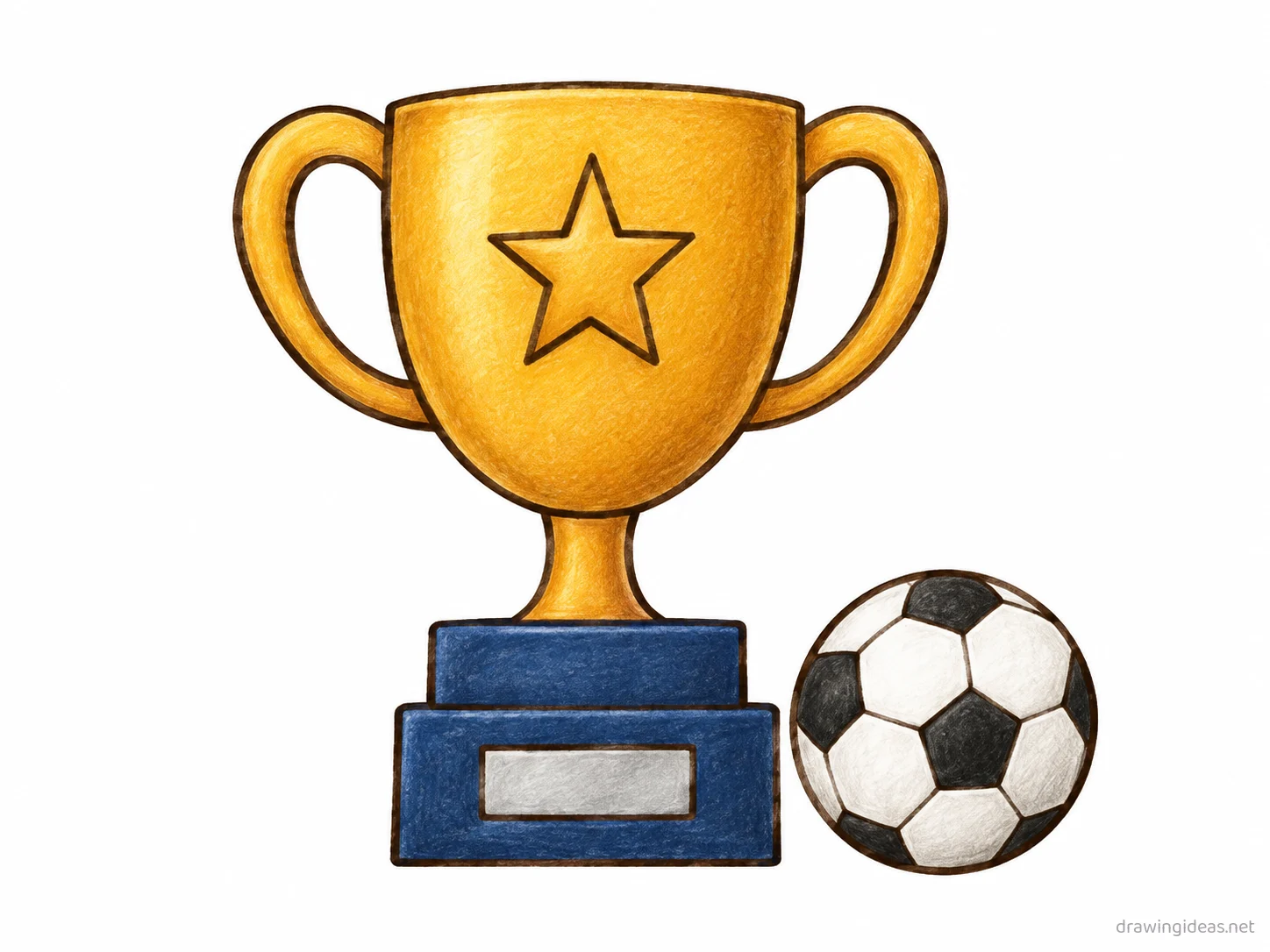
How to Draw Sports Step by Step
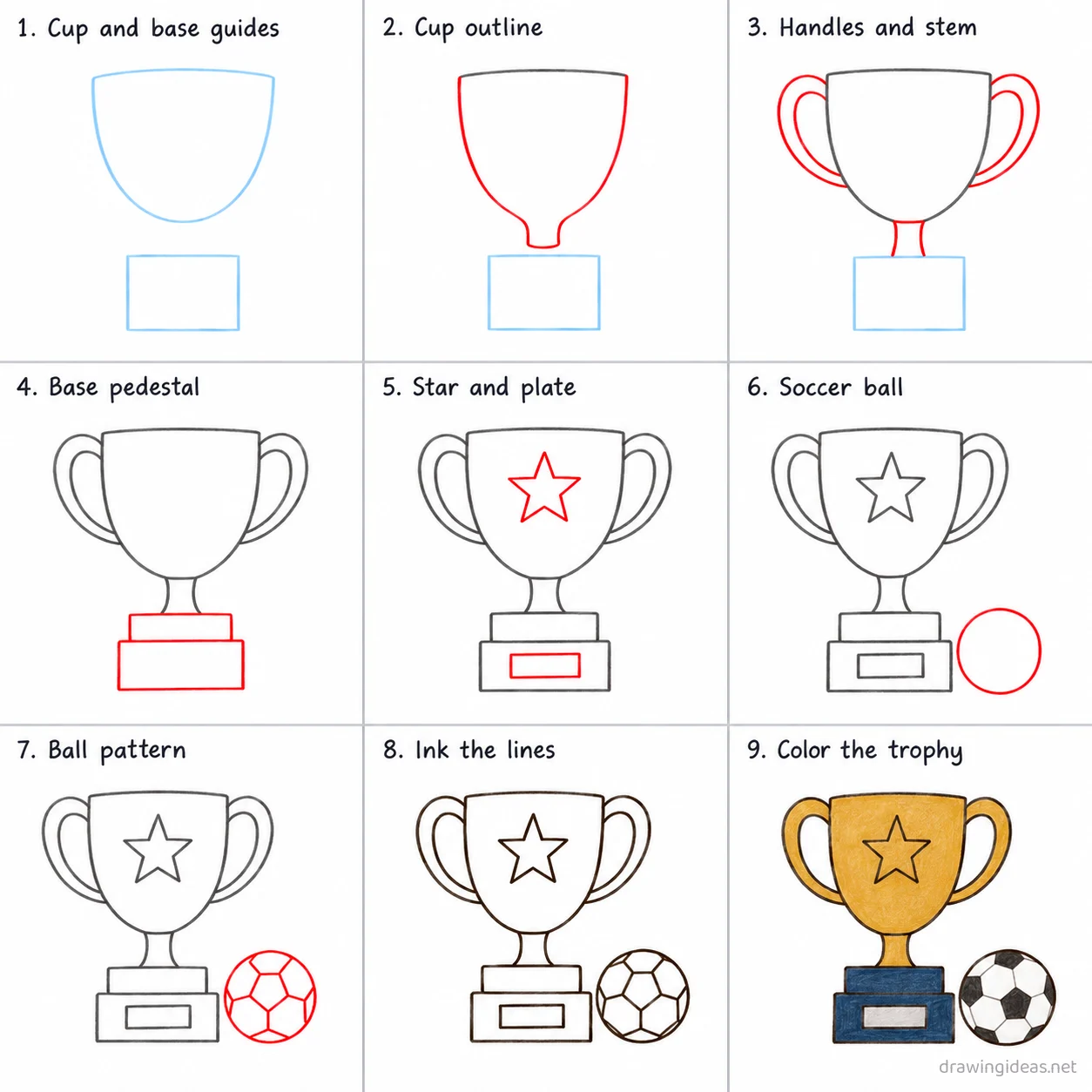
Step 1 of 9
Cup and base guides
Draw a light cup-shaped guide in the upper middle of the page, then a light rectangle below it for the base.
-
Cup and base guides
Draw a light cup-shaped guide in the upper middle of the page, then a light rectangle below it for the base.
-
Cup outline
Trace the cup guide as a trophy outline, narrowing into a short stem at the bottom.
-
Handles and stem
Add a curved loop handle on each side of the cup, then a short narrow stem below it.
-
Base pedestal
Trace the base guide as two stacked rectangles forming a pedestal under the stem.
-
Star and plate
Add a five-point star centered on the front of the cup, then a small name plate rectangle on the base.
-
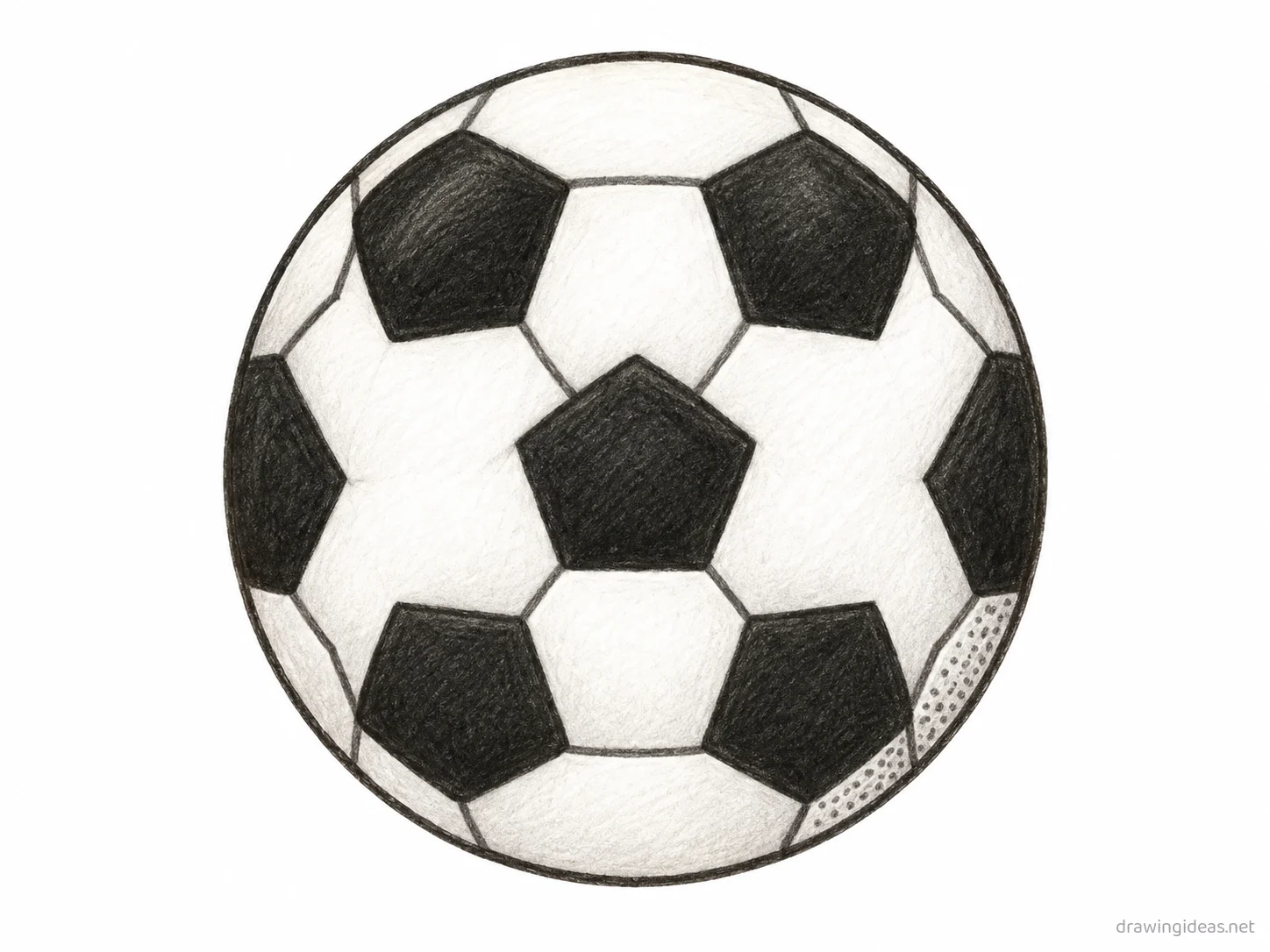
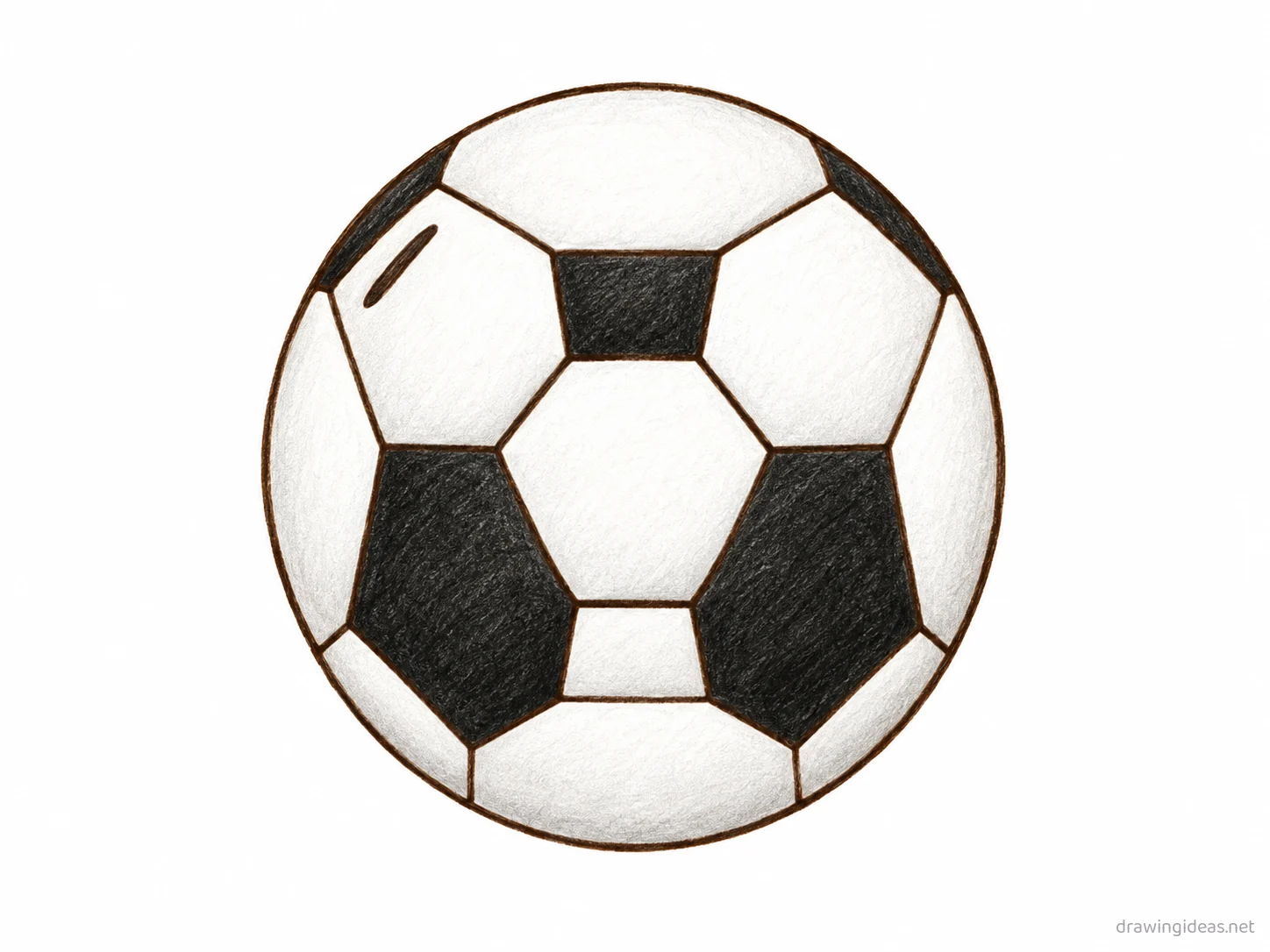
Soccer ball
Draw a round ball outline resting on the ground beside the trophy base.
-
Ball pattern
Add a pentagon shape and a few connecting lines on the surface of the soccer ball.
-
Ink the lines
Go over every kept line with dark ink, then erase the light cup and base guide shapes.
-
Color the trophy
Fill the cup and handles gold, the base dark blue, the name plate silver, and the soccer ball white and black.
Sports Drawing Ideas to Try Next
Once the basic sports clicks, run it through these variations — each one practices a different skill while staying on a subject you already know.
-
Sports mid-action with motion lines
Draw the equipment in motion — speed lines and a blur trail add energy for free.
-
Kawaii sports mascot
Put a determined little face on it and stubby arms — sports equipment makes great characters.
-
A team poster design
The sports plus a banner, a jersey number, and bold lettering — the design players actually want.
-
A trophy-shelf still life
Your sports sitting among medals and a small trophy — the memory-shelf composition.
Tips for Better Sports Drawings
- On any ball, every seam line must curve with the sphere — one straight line flattens it into a sticker.
- Add a scuff or a grass stain: used equipment has character that showroom equipment doesn’t.
Not feeling sports today?
Let the generator pick your next subject — filtered by mood and difficulty.
🎲 Random Drawing GeneratorSports Drawing FAQ
How do you draw sports easily?
Start with precise basic geometry (usually a circle), keeping your lines light. Refine the outline, add the defining details, then erase the construction shapes. The nine-step method above breaks this down — most people get a recognizable sports on their very first try with it.
How long should it take to draw sports?
A simple sports drawing takes about 10 minutes following this tutorial. A quick doodle version can be done in two or three minutes, while a detailed, fully-shaded study might take an hour. Speed comes with repetition — the second attempt is always faster than the first.
What do I need to draw sports?
Just a pencil, an eraser, and any paper. An HB pencil for construction lines and a 2B for final outlines is a nice upgrade, and colored pencils or markers finish it off — but nothing on this page requires special supplies.
Can kids draw sports?
Yes — sports are one of the friendlier subjects for beginners, and this method was written for first-timers. Kids can follow the same steps; just expect wobblier lines and more charm.