Side Profile Drawing: Step-by-Step Tutorial & Easy Ideas
Learning how to draw a side profile is easier than it looks — the whole thing starts with light guidelines. This guide walks you through a side profile drawing in six clear steps, then hands you a set of side profile drawing ideas to keep going: easy versions for beginners, cute and cartoon takes, and variations worth sketching when you want more.
- Difficulty Medium
- Time ~20 min
- Tools Pencil, eraser, paper
- Starts with light guidelines
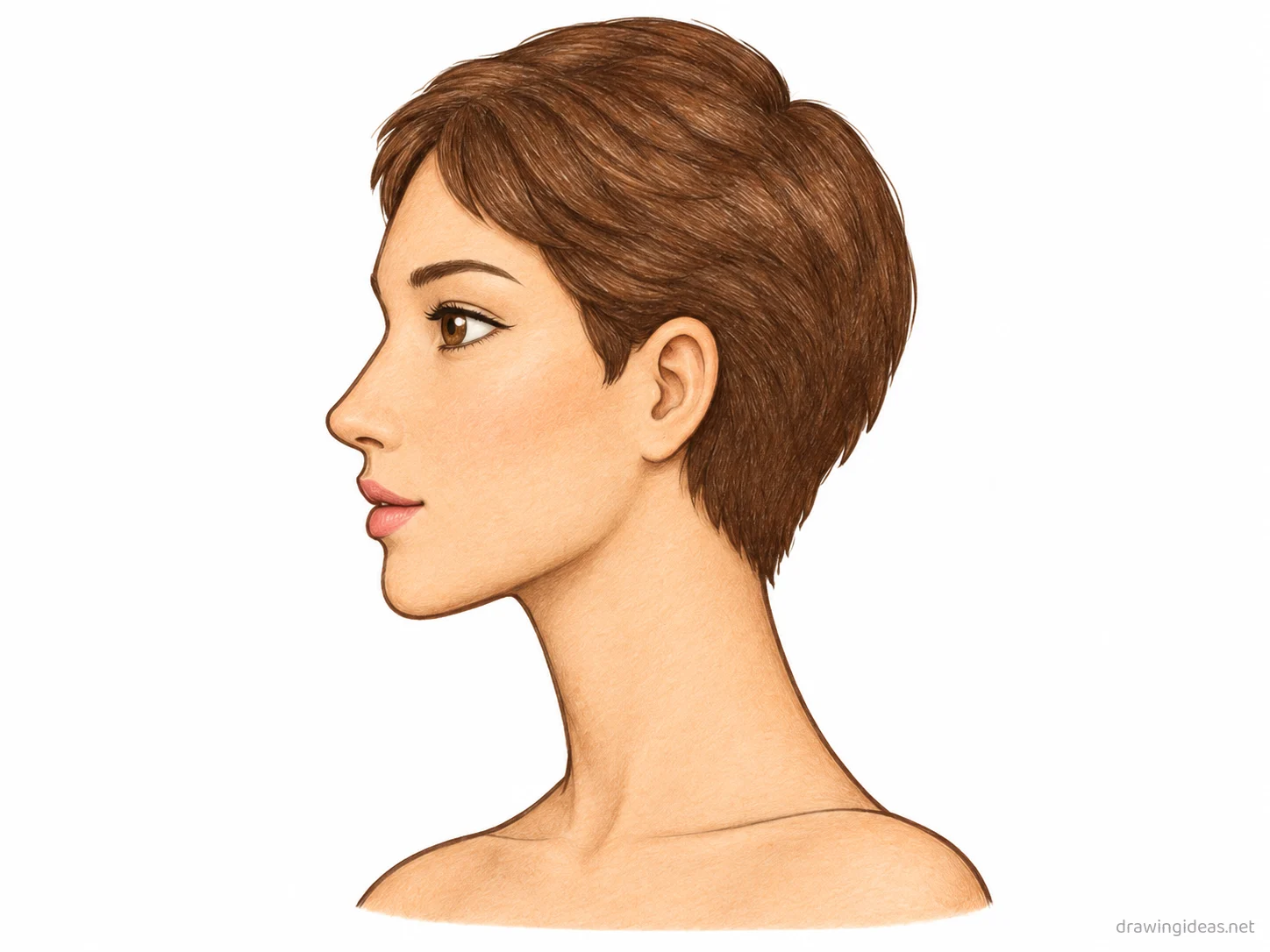
How to Draw a Side Profile Step by Step
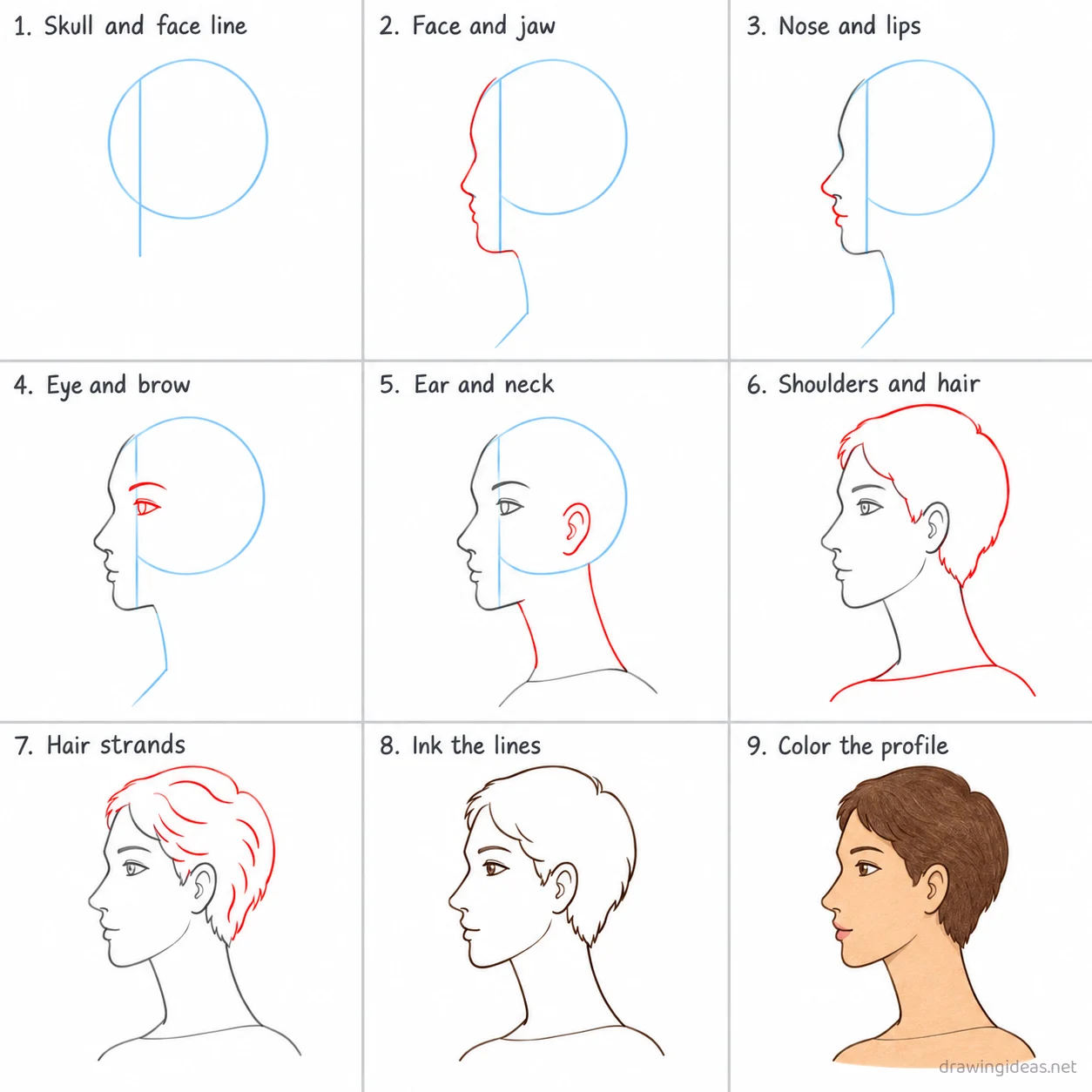
Step 1 of 9
Skull and face line
Draw a light circle for the skull in the upper middle of the page, then a light vertical line marking the front of the face inside it.
-
Skull and face line
Draw a light circle for the skull in the upper middle of the page, then a light vertical line marking the front of the face inside it.
-
Face and jaw
Trace the forehead, brow, nose bridge, lips and a rounded chin along the front of the circle down to the jaw.
-
Nose and lips
Add a small bump for the nose projecting forward, and two short curved lines just below it for the lips.
-
Eye and brow
Add one almond-shaped eye below the forehead, then a short curved eyebrow line just above it.
-
Ear and neck
Add a small curved ear on the side of the head, then two neck lines running down from the chin and from behind the ear.
-
Shoulders and hair
Draw a sloping shoulder line connecting the bottoms of the two neck lines, then cover the top and back of the skull with a rounded hair shape.
-
Hair strands
Add a few wavy lines inside the hair shape for texture.
-
Ink the lines
Go over every kept line with dark ink, then erase the light skull circle and center face line guides.
-
Color the profile
Fill the skin a warm tan, the hair brown, the lips a soft rose, and the eye light brown.
Side Profile Drawing Ideas to Try Next
Once the basic side profile clicks, run it through these variations — each one practices a different skill while staying on a subject you already know.
-
A before/after side profile comparison
Draw the same subject with and without the technique side by side — proof of what you've learned.
-
A practice grid of side profile studies
Divide the page into six boxes and repeat the exercise with one variation each — visible progress on a single page.
-
Apply side profile to a simple still life
Use the technique on a mug and a book from your desk — real objects make practice stick.
-
A timed side profile challenge
The same exercise at 5 minutes, 1 minute, and 30 seconds — speed reveals what you truly know.
Tips for Better Side Profile Drawings
- Slow is smooth and smooth is fast: technique practice done deliberately beats ten rushed repetitions.
- Change exactly one variable per repetition — new angle, new size, new subject. That’s how practice compounds into skill.
Not feeling the side profile today?
Let the generator pick your next subject — filtered by mood and difficulty.
🎲 Random Drawing GeneratorSide Profile Drawing FAQ
How do you draw a side profile easily?
Start with light guidelines, keeping your lines light. Refine the outline, add the defining details, then erase the construction shapes. The nine-step method above breaks this down — most people get a recognizable side profile on their very first try with it.
How long does a side profile drawing take?
A simple side profile drawing takes about 20 minutes following this tutorial. A quick doodle version can be done in two or three minutes, while a detailed, fully-shaded study might take an hour. Speed comes with repetition — the second attempt is always faster than the first.
What do I need to draw a side profile?
Just a pencil, an eraser, and any paper. An HB pencil for construction lines and a 2B for final outlines is a nice upgrade, and colored pencils or markers finish it off — but nothing on this page requires special supplies.
Is a side profile easy to draw for beginners?
Yes — the side profile is very manageable once you use construction shapes, and this method was written for first-timers. Kids can follow the same steps; just expect wobblier lines and more charm.