Santa Hat Drawing: Step-by-Step Tutorial & Easy Ideas
Want to draw a Santa hat that actually looks right? Start with two or three simple geometric shapes and build from there. This page covers the full process — nine steps from first line to finished drawing — followed by Santa hat drawing ideas in every style: easy, cute, realistic, and a few you probably haven't tried.
- Difficulty Easy
- Time ~12 min
- Tools Pencil, eraser, paper
- Starts with two or three simple geometric shapes
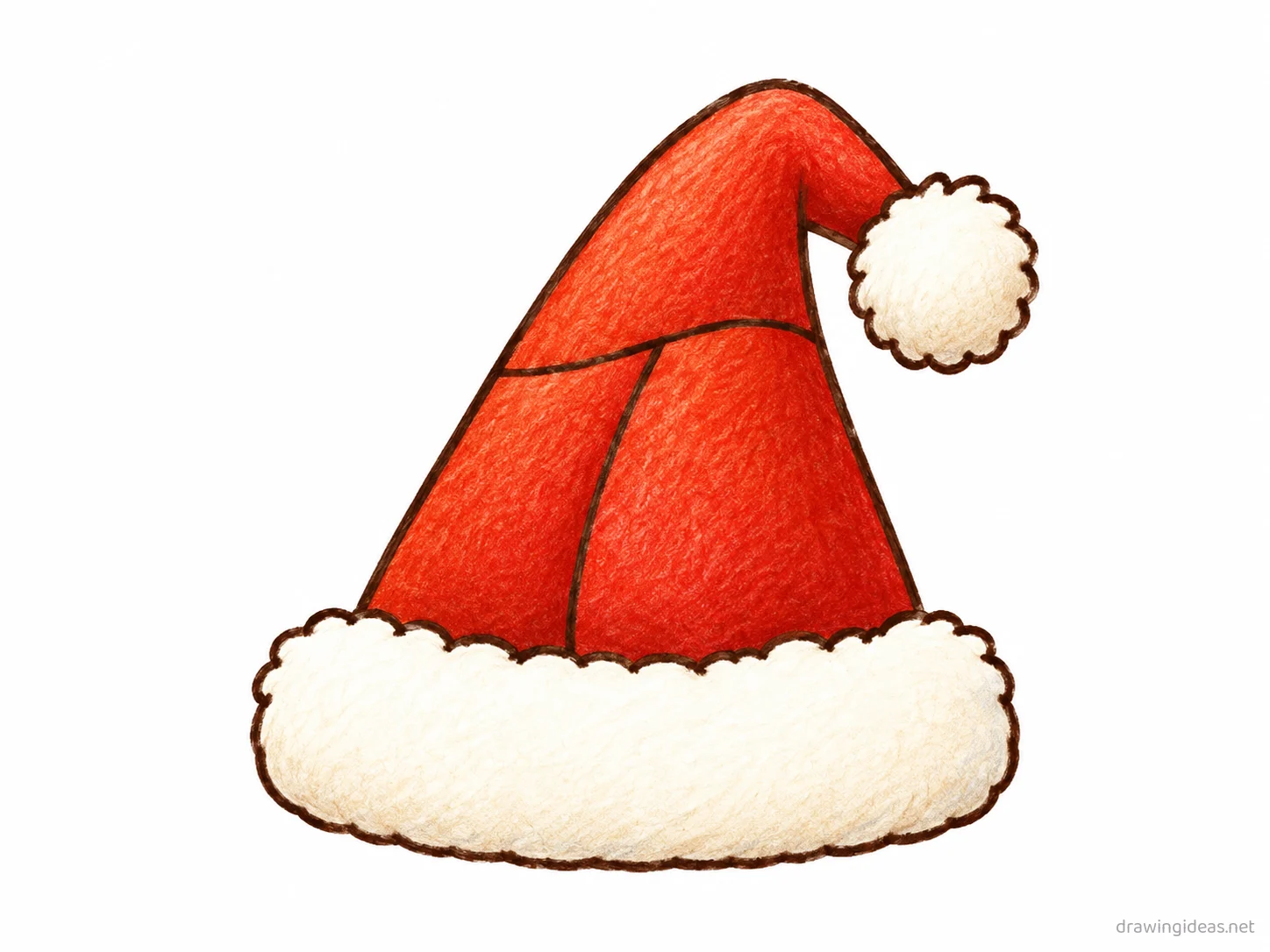
How to Draw a Santa Hat Step by Step
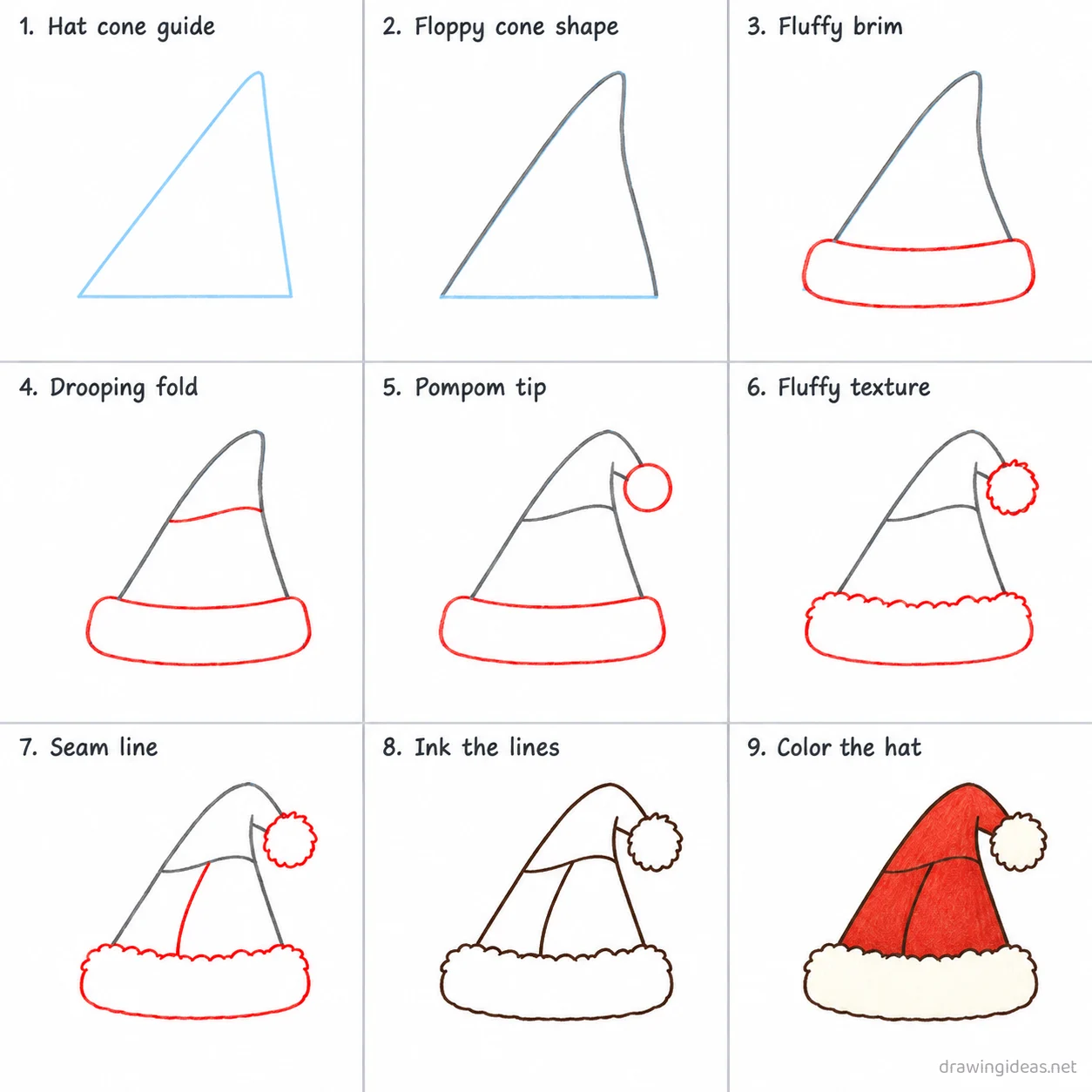
Step 1 of 9
Hat cone guide
Draw one light triangle in the middle of the page, wide at the bottom and tapering up and to the right to a point.
-
Hat cone guide
Draw one light triangle in the middle of the page, wide at the bottom and tapering up and to the right to a point.
-
Floppy cone shape
Trace the cone outline on the guide, curving the right edge softly instead of keeping it straight.
-
Fluffy brim
Add a thick curved band across the bottom of the cone for the fur brim.
-
Drooping fold
Partway up the cone, add a soft curved line showing where the hat bends as it droops.
-
Pompom tip
At the drooping tip of the cone, draw a round pompom ball.
-
Fluffy texture
Add small fluffy bumps along the top edge of the brim and small tufts around the pompom.
-
Seam line
Add one curved seam line running from the middle of the brim up toward the fold.
-
Ink the lines
Go over every kept line with dark ink, then erase the light triangle guide.
-
Color the hat
Fill the cone bright red, and the brim and pompom soft white.
Santa Hat Drawing Ideas to Try Next
Once the basic Santa hat clicks, run it through these variations — each one practices a different skill while staying on a subject you already know.
-
A Santa hat greeting-card design
Center the Santa hat, add a hand-lettered greeting and a simple border — an actually usable drawing.
-
A Santa hat garland or pattern
Repeat small Santa hat drawings along a string or in rows — decoration you can actually put up.
-
Santa hat in a snow globe
Draw a circle, put the Santa hat inside, add a base and floating flakes — instant keepsake feel.
-
A gift-tag sized mini Santa hat
Design it small and simple enough to draw twenty times on gift tags.
-
Kawaii Santa hat with a face
The cute-ify formula: dot eyes, blush circles, tiny smile on your Santa hat.
Tips for Better Santa Hat Drawings
- Holiday palettes are part of the drawing: commit to the expected colors boldly rather than muddying them.
- Lean into the classic version first — holiday subjects work through instant recognition. Add your twist after the icon is solid.
Not feeling the Santa hat today?
Let the generator pick your next subject — filtered by mood and difficulty.
🎲 Random Drawing GeneratorSanta Hat Drawing FAQ
How do you draw a Santa hat easily?
Start with two or three simple geometric shapes, keeping your lines light. Refine the outline, add the defining details, then erase the construction shapes. The nine-step method above breaks this down — most people get a recognizable Santa hat on their very first try with it.
How long does a Santa hat drawing take?
A simple Santa hat drawing takes about 12 minutes following this tutorial. A quick doodle version can be done in two or three minutes, while a detailed, fully-shaded study might take an hour. Speed comes with repetition — the second attempt is always faster than the first.
What supplies do I need for Santa hat drawings?
Just a pencil, an eraser, and any paper. An HB pencil for construction lines and a 2B for final outlines is a nice upgrade, and colored pencils or markers finish it off — but nothing on this page requires special supplies.
Can kids draw a Santa hat?
Yes — the Santa hat is one of the friendlier subjects for beginners, and this method was written for first-timers. Kids can follow the same steps; just expect wobblier lines and more charm.