Dress Drawing: Step-by-Step Tutorial & Easy Ideas
Dress drawings are one of the most-loved sketching subjects, and for good reason — the basic version comes together from the garment’s flat silhouette in just a few minutes. Follow the nine steps below to get the foundations right, then browse the ideas list for your next dress sketch.
- Difficulty Medium
- Time ~15 min
- Tools Pencil, eraser, paper
- Starts with the garment’s flat silhouette
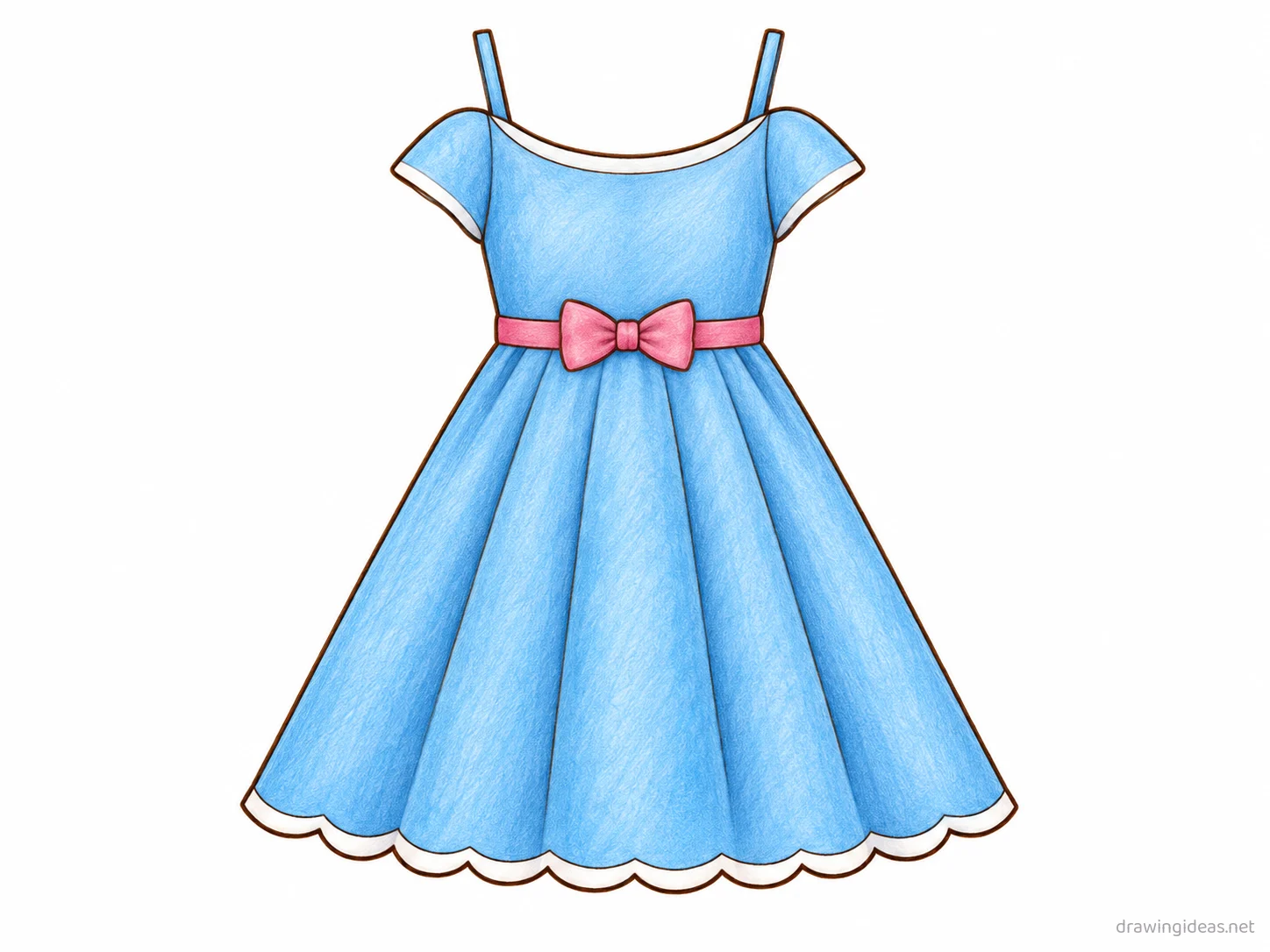
How to Draw a Dress Step by Step
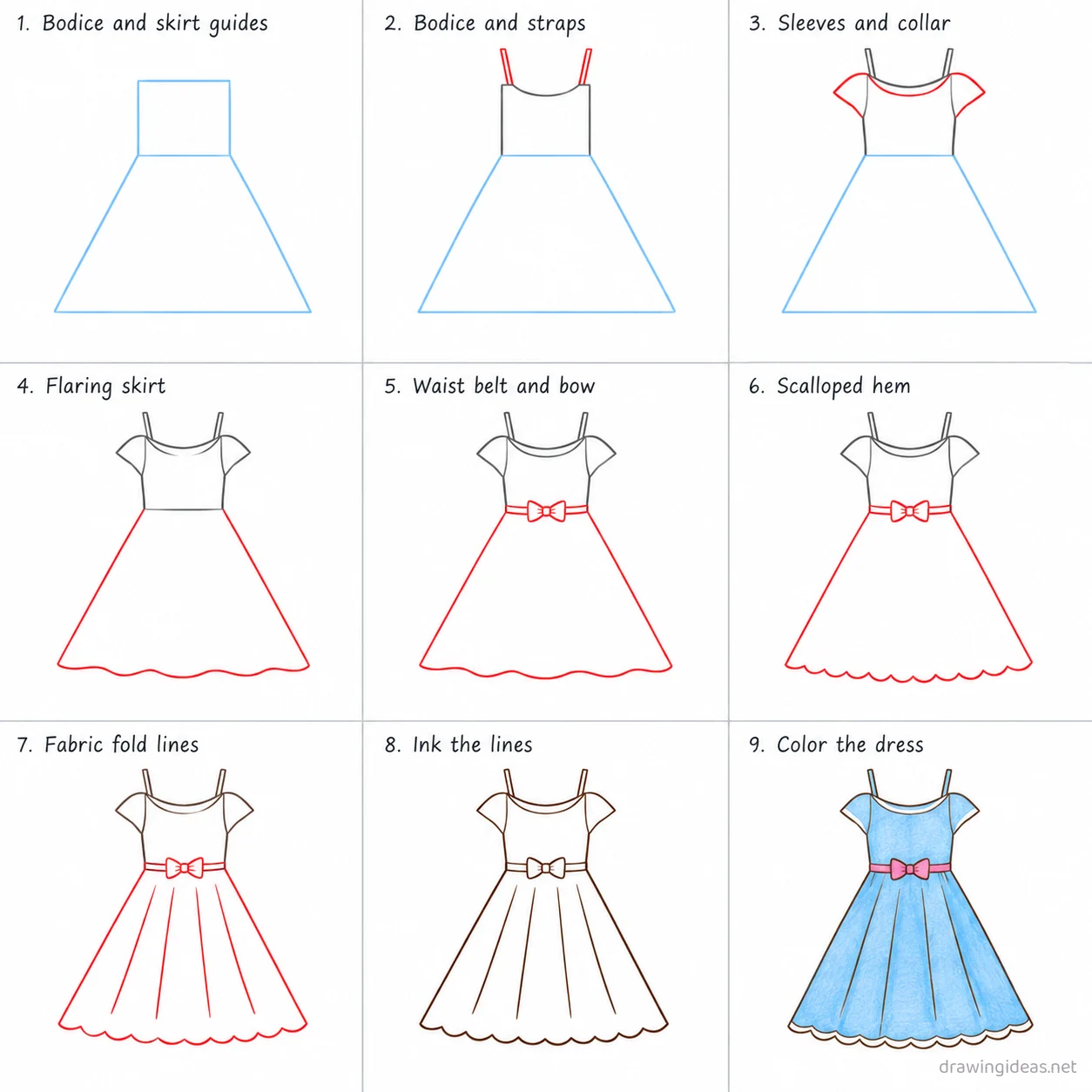
Step 1 of 9
Bodice and skirt guides
Draw a light rectangle in the upper middle of the page for the bodice, then a wide trapezoid below it flaring out for the skirt.
-
Bodice and skirt guides
Draw a light rectangle in the upper middle of the page for the bodice, then a wide trapezoid below it flaring out for the skirt.
-
Bodice and straps
Trace the bodice outline with a soft curved neckline, then add two thin straps rising from the neckline to the top of the page.
-
Sleeves and collar
Add a short draping cap sleeve on each shoulder, then a thin trim line just inside the neckline.
-
Flaring skirt
Trace the skirt outline on the trapezoid so it flares smoothly from the waist down to a gently wavy hem.
-
Waist belt and bow
Draw a slim belt band where the bodice meets the skirt, then a small bow centered on the belt.
-
Scalloped hem
Add a row of small rounded scallops tracing along the bottom edge of the skirt.
-
Fabric fold lines
Add four gentle curved lines running down the skirt from the waist to the hem to suggest soft fabric folds.
-
Ink the lines
Go over every kept line with dark ink, then erase the light bodice rectangle and skirt trapezoid guides.
-
Color the dress
Fill the bodice and skirt a soft blue, the belt and bow a deeper rose, and the trim and scallops white.
Dress Drawing Ideas to Try Next
Once the basic dress clicks, run it through these variations — each one practices a different skill while staying on a subject you already know.
-
A dress flat-lay design sheet
Draw it laid flat like a shop listing — the fashion-design standard that's easier than on-body.
-
A four-season dress lineup
The same garment styled four ways in four panels.
-
Dress on a clothesline
Hang it with two pins on a sagging line — motion and setting from one curve.
-
A patched and embroidered dress
Cover it with patches, pins, and stitching details — personality through decoration.
Tips for Better Dress Drawings
- Draw the body’s curve lightly under the garment first; clothes are shaped by what’s inside them.
- Folds radiate from tension points (joints, seams, gathers) — random folds look like wrinkled paper, radiating folds look like fabric.
Not feeling the dress today?
Let the generator pick your next subject — filtered by mood and difficulty.
🎲 Random Drawing GeneratorDress Drawing FAQ
What is the easiest way to draw a dress?
Start with the garment’s flat silhouette, keeping your lines light. Refine the outline, add the defining details, then erase the construction shapes. The nine-step method above breaks this down — most people get a recognizable dress on their very first try with it.
How long does a dress drawing take?
A simple dress drawing takes about 15 minutes following this tutorial. A quick doodle version can be done in two or three minutes, while a detailed, fully-shaded study might take an hour. Speed comes with repetition — the second attempt is always faster than the first.
What do I need to draw a dress?
Just a pencil, an eraser, and any paper. An HB pencil for construction lines and a 2B for final outlines is a nice upgrade, and colored pencils or markers finish it off — but nothing on this page requires special supplies.
Is a dress easy to draw for beginners?
Yes — the dress is very manageable once you use construction shapes, and this method was written for first-timers. Kids can follow the same steps; just expect wobblier lines and more charm.