Clothes Drawing: Step-by-Step Tutorial & Easy Ideas
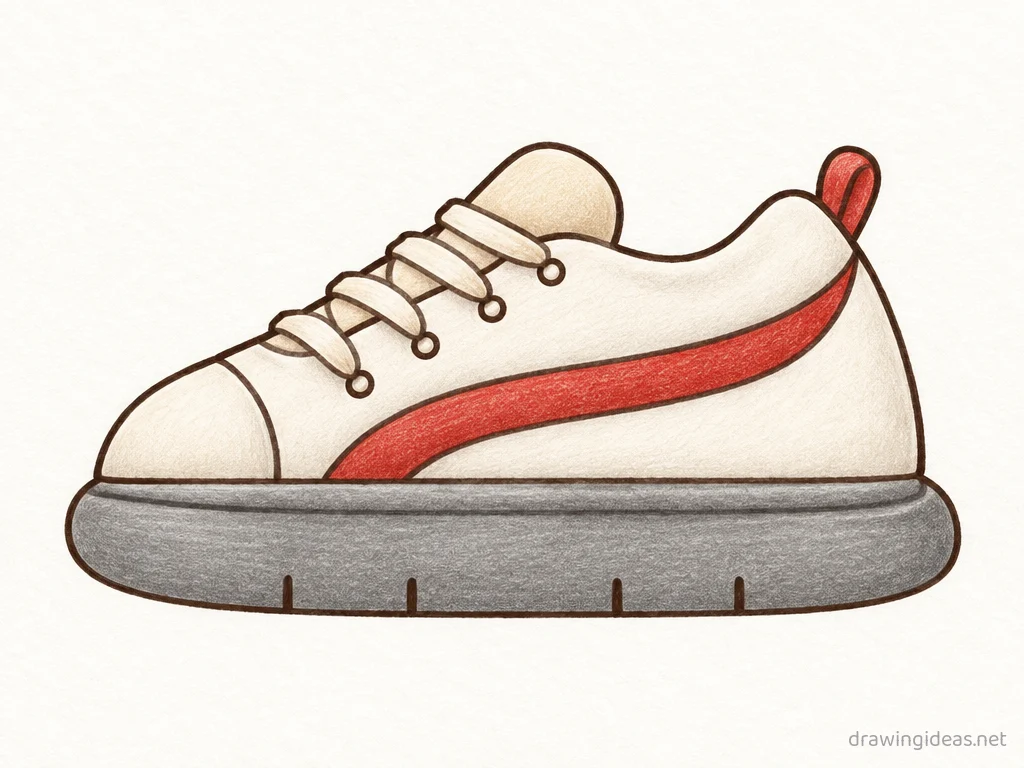
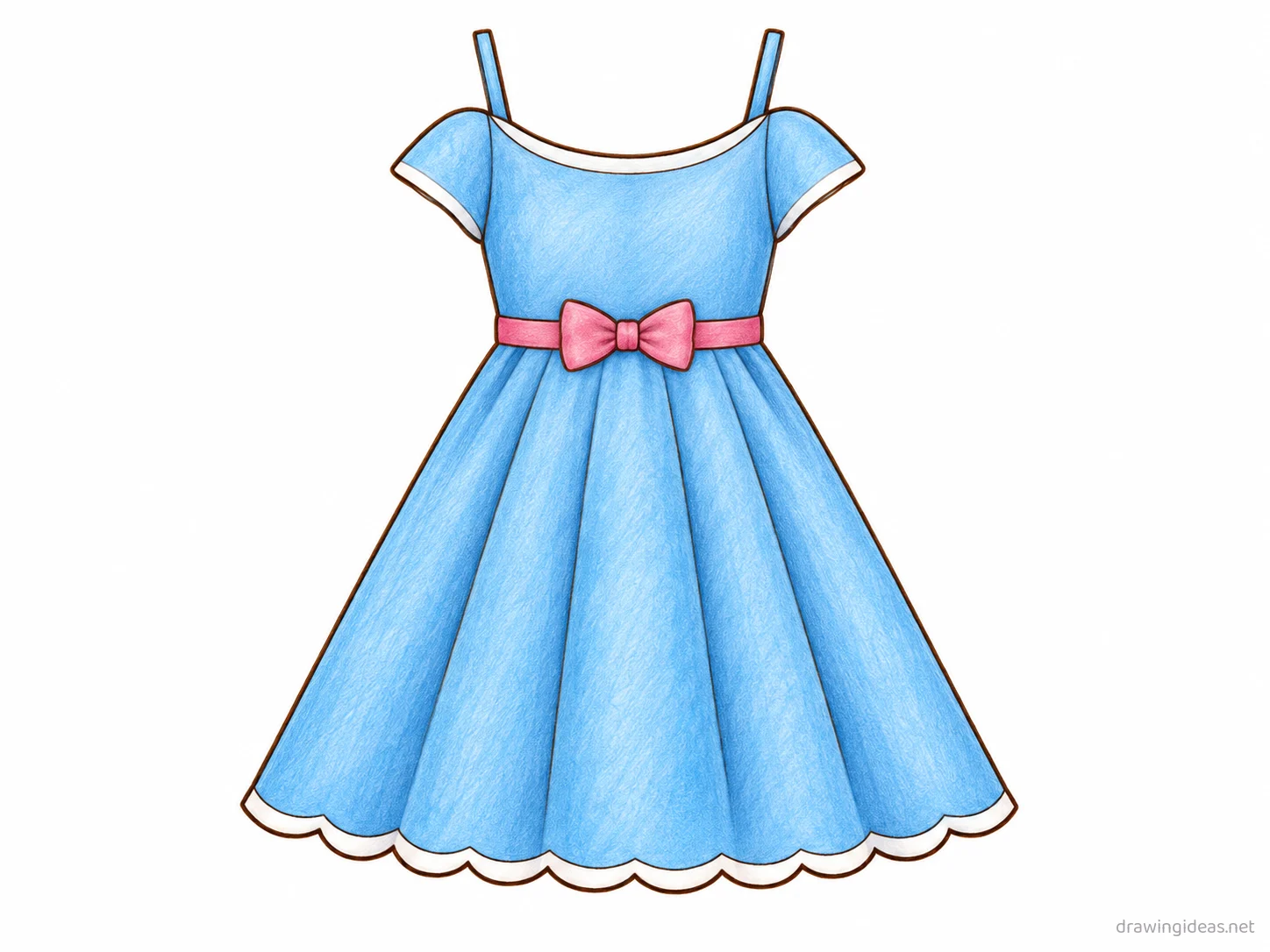
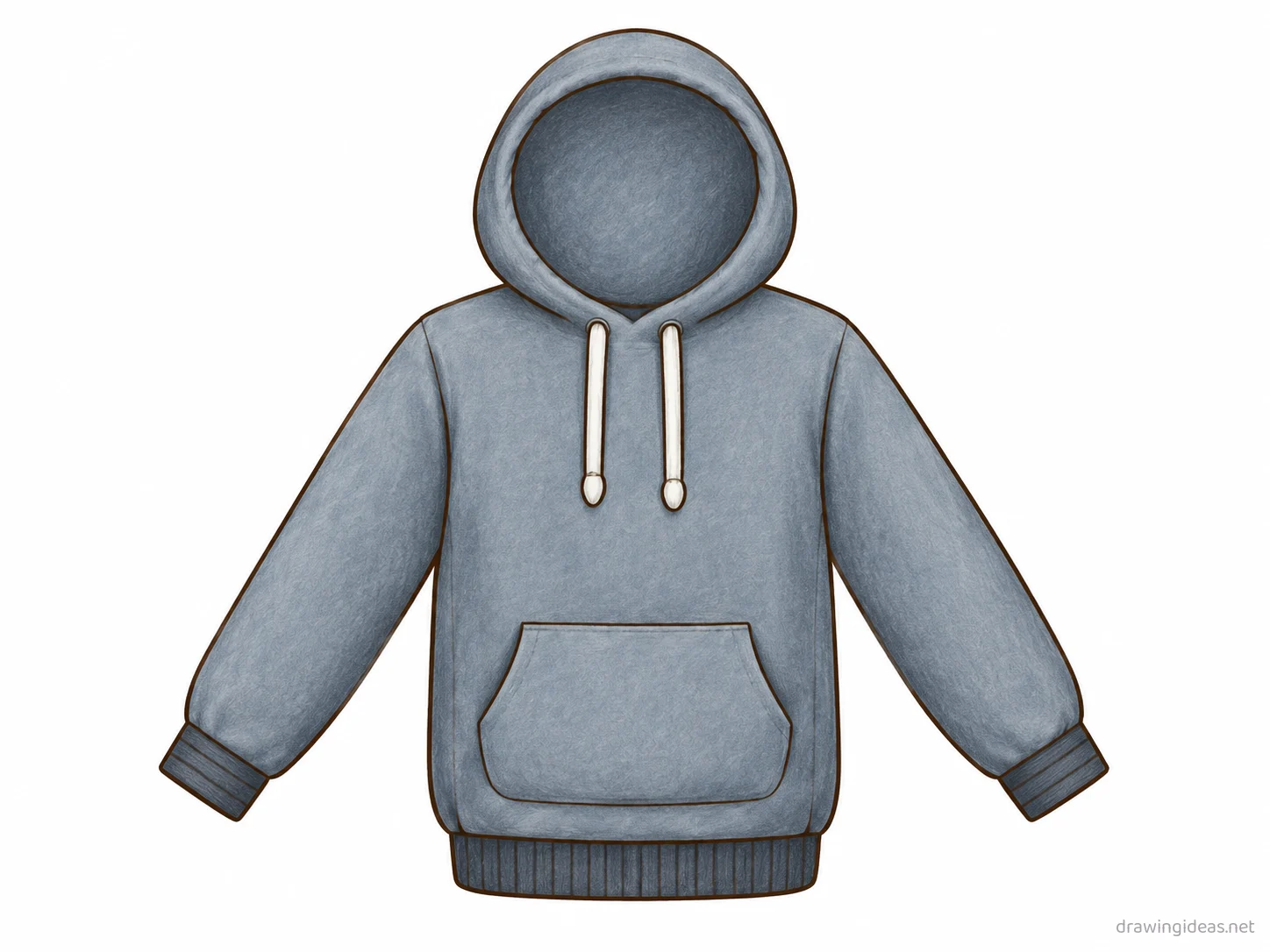
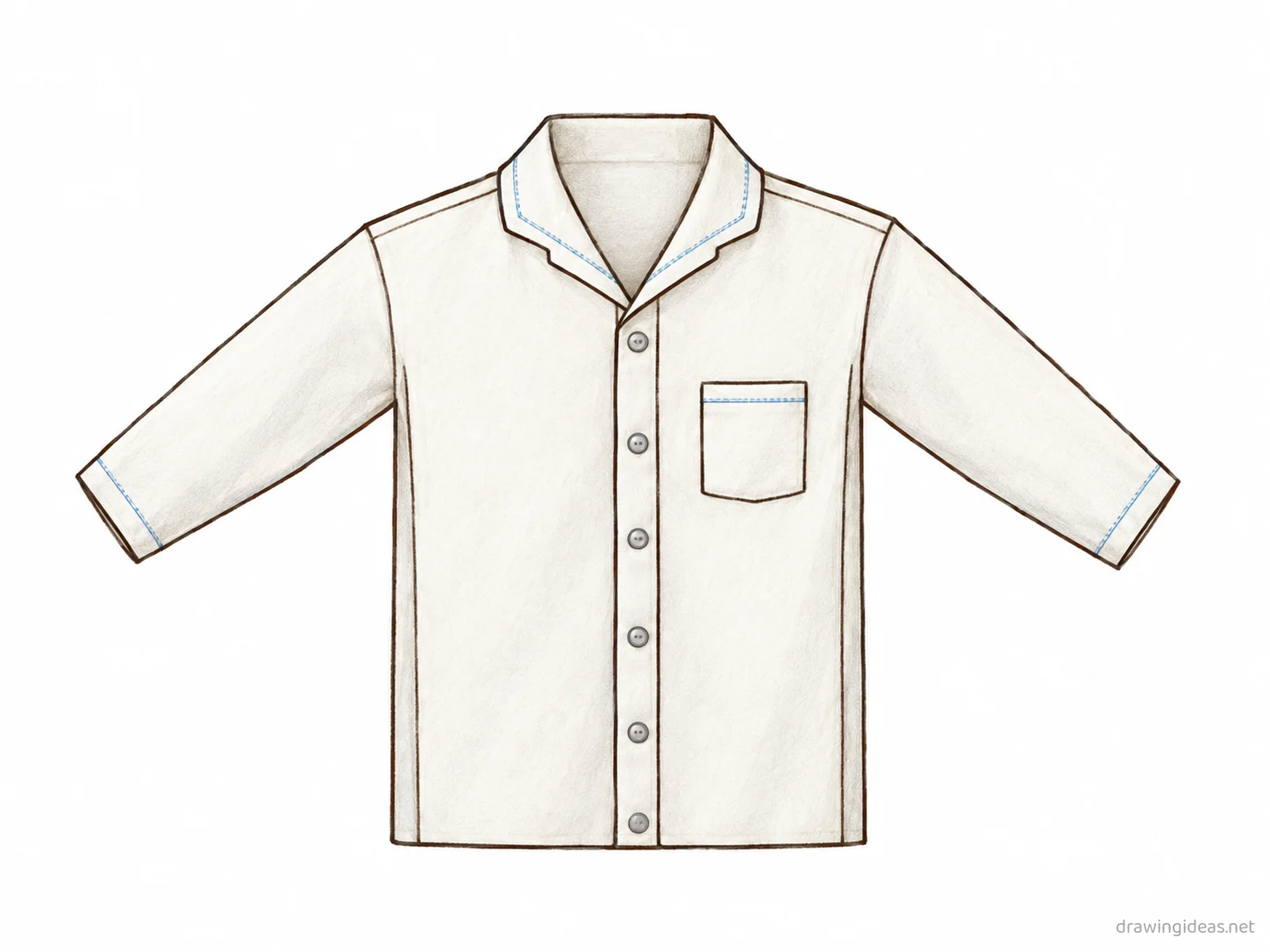
If you can draw the garment’s flat silhouette, you can draw clothes. That's genuinely the whole secret — the rest is knowing which lines to add in which order, and this tutorial shows you exactly that, step by step, before serving up a full list of clothes drawing ideas to practice with.
- Difficulty Medium
- Time ~15 min
- Tools Pencil, eraser, paper
- Starts with the garment’s flat silhouette
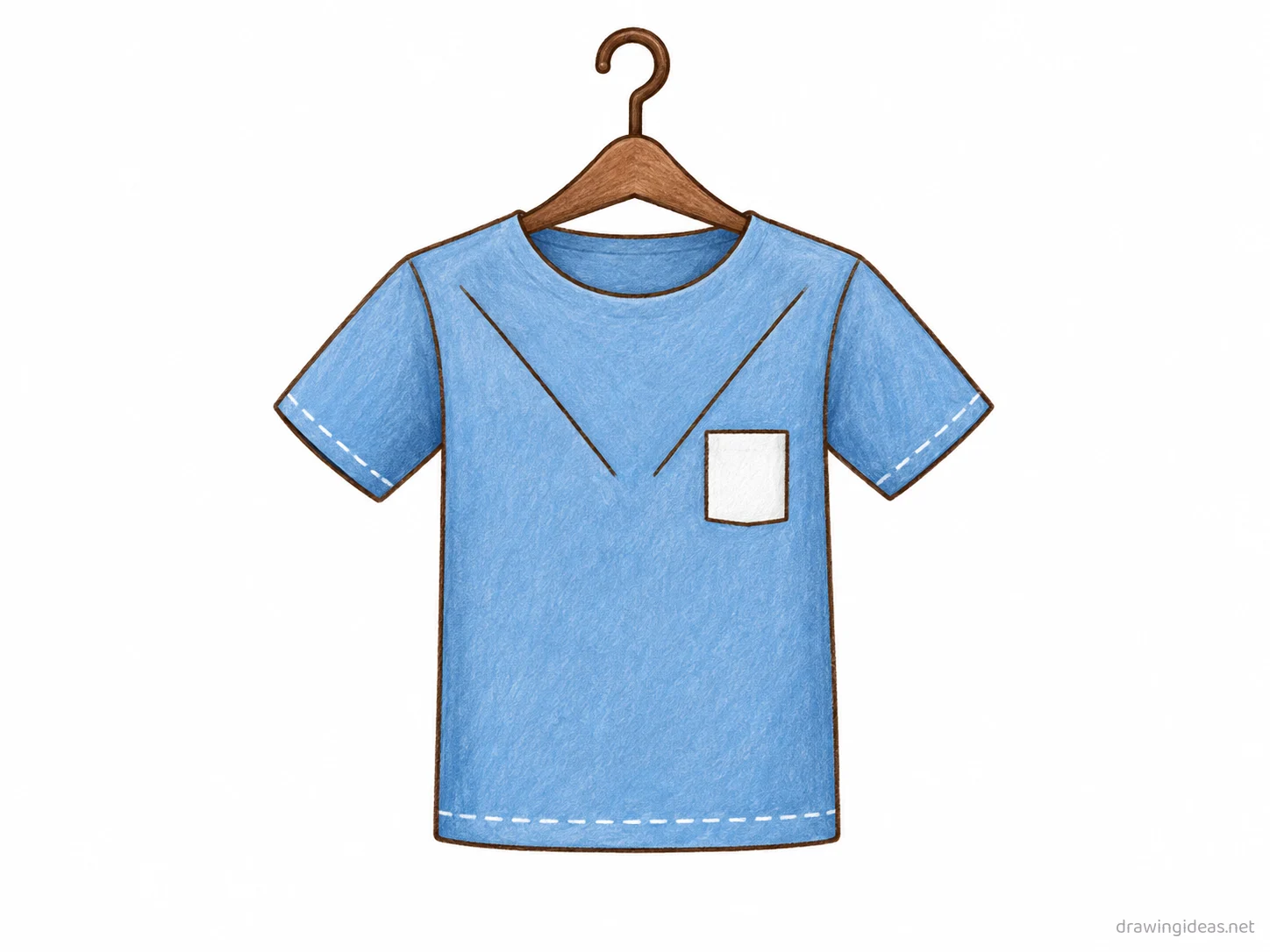
How to Draw Clothes Step by Step
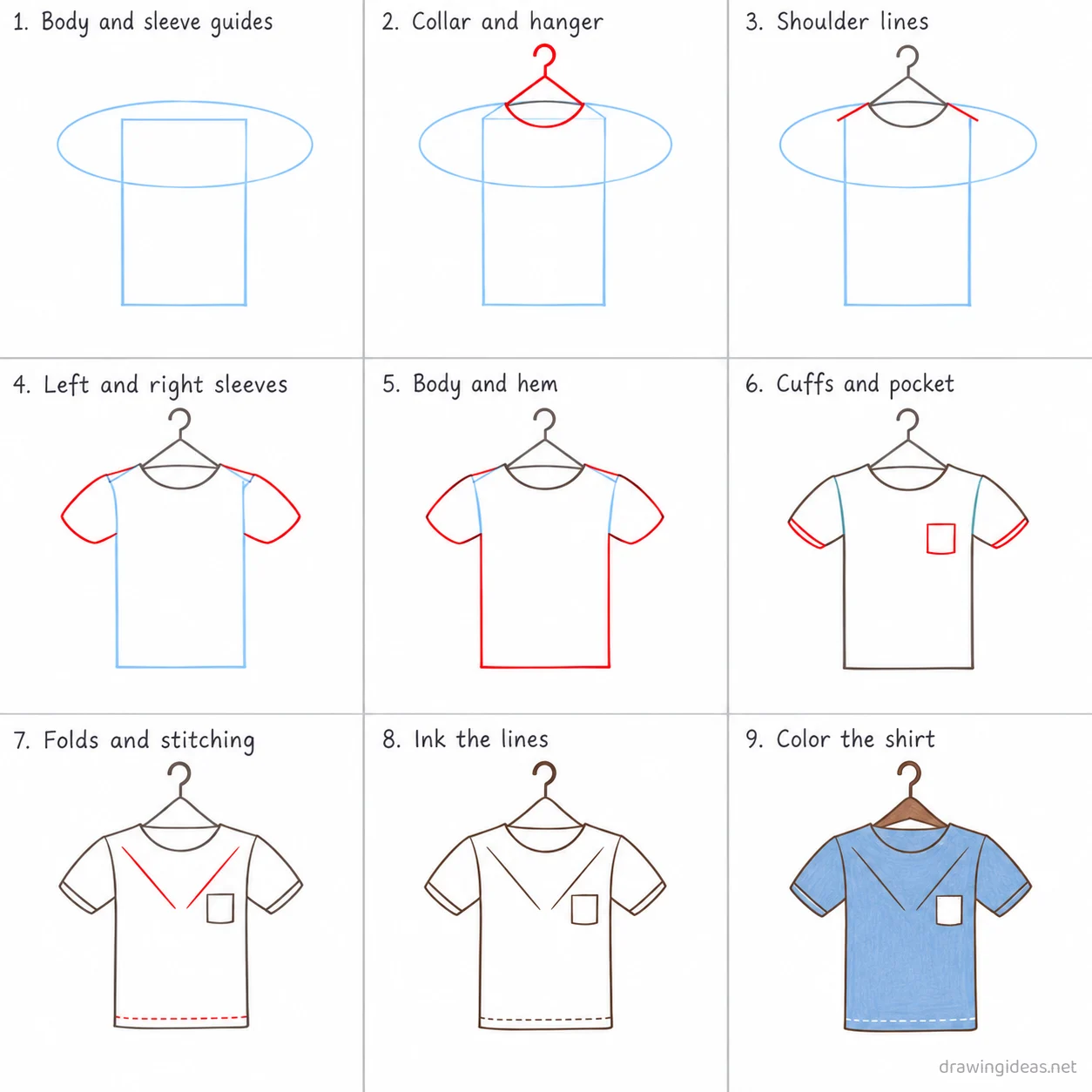
Step 1 of 9
Body and sleeve guides
Draw a light rectangle in the middle of the page for the shirt body, then a wide flat oval across the top for the shoulders and sleeves.
-
Body and sleeve guides
Draw a light rectangle in the middle of the page for the shirt body, then a wide flat oval across the top for the shoulders and sleeves.
-
Collar and hanger
Draw a rounded dipping neckline at the top of the rectangle, then a small triangular hanger with a hook above it.
-
Shoulder lines
Draw two short sloped lines from the collar out to each shoulder point.
-
Left and right sleeves
Draw a short rounded sleeve curving out and back in on the left shoulder, and a mirrored sleeve on the right.
-
Body and hem
Draw two straight side lines from the sleeves down to the bottom, then close the shirt with a straight hem line.
-
Cuffs and pocket
Add a short curved cuff closing each sleeve opening, then a small rectangular pocket on the left chest.
-
Folds and stitching
Add a diagonal fold crease from each shoulder toward the center, then a thin stitch line just above the hem.
-
Ink the lines
Go over every kept line with dark ink, then erase the light body rectangle and sleeve oval guides.
-
Color the shirt
Fill the shirt body and sleeves light blue, the pocket and stitching white, and the hanger brown.
Clothes Drawing Ideas to Try Next
Once the basic clothes clicks, run it through these variations — each one practices a different skill while staying on a subject you already know.
-
A patched and embroidered clothes
Cover it with patches, pins, and stitching details — personality through decoration.
-
Clothes on a clothesline
Hang it with two pins on a sagging line — motion and setting from one curve.
-
A four-season clothes lineup
The same garment styled four ways in four panels.
-
A clothes flat-lay design sheet
Draw it laid flat like a shop listing — the fashion-design standard that's easier than on-body.
Tips for Better Clothes Drawings
- Draw the body’s curve lightly under the garment first; clothes are shaped by what’s inside them.
- Folds radiate from tension points (joints, seams, gathers) — random folds look like wrinkled paper, radiating folds look like fabric.
Not feeling clothes today?
Let the generator pick your next subject — filtered by mood and difficulty.
🎲 Random Drawing GeneratorClothes Drawing FAQ
How do you draw clothes easily?
Start with the garment’s flat silhouette, keeping your lines light. Refine the outline, add the defining details, then erase the construction shapes. The nine-step method above breaks this down — most people get a recognizable clothes on their very first try with it.
How long does clothes drawing take?
A simple clothes drawing takes about 15 minutes following this tutorial. A quick doodle version can be done in two or three minutes, while a detailed, fully-shaded study might take an hour. Speed comes with repetition — the second attempt is always faster than the first.
What supplies do I need for clothes drawings?
Just a pencil, an eraser, and any paper. An HB pencil for construction lines and a 2B for final outlines is a nice upgrade, and colored pencils or markers finish it off — but nothing on this page requires special supplies.
Can kids draw clothes?
Yes — clothes are very manageable once you use construction shapes, and this method was written for first-timers. Kids can follow the same steps; just expect wobblier lines and more charm.