Bad Bunny Drawing: Step-by-Step Tutorial & Easy Ideas
Learning how to draw Bad Bunny is easier than it looks — the whole thing starts with a light proportion framework. This guide walks you through a Bad Bunny drawing in six clear steps, then hands you a set of Bad Bunny drawing ideas to keep going: easy versions for beginners, cute and cartoon takes, and variations worth sketching when you want more.
- Difficulty Hard
- Time ~25 min
- Tools Pencil, eraser, paper
- Starts with a light proportion framework
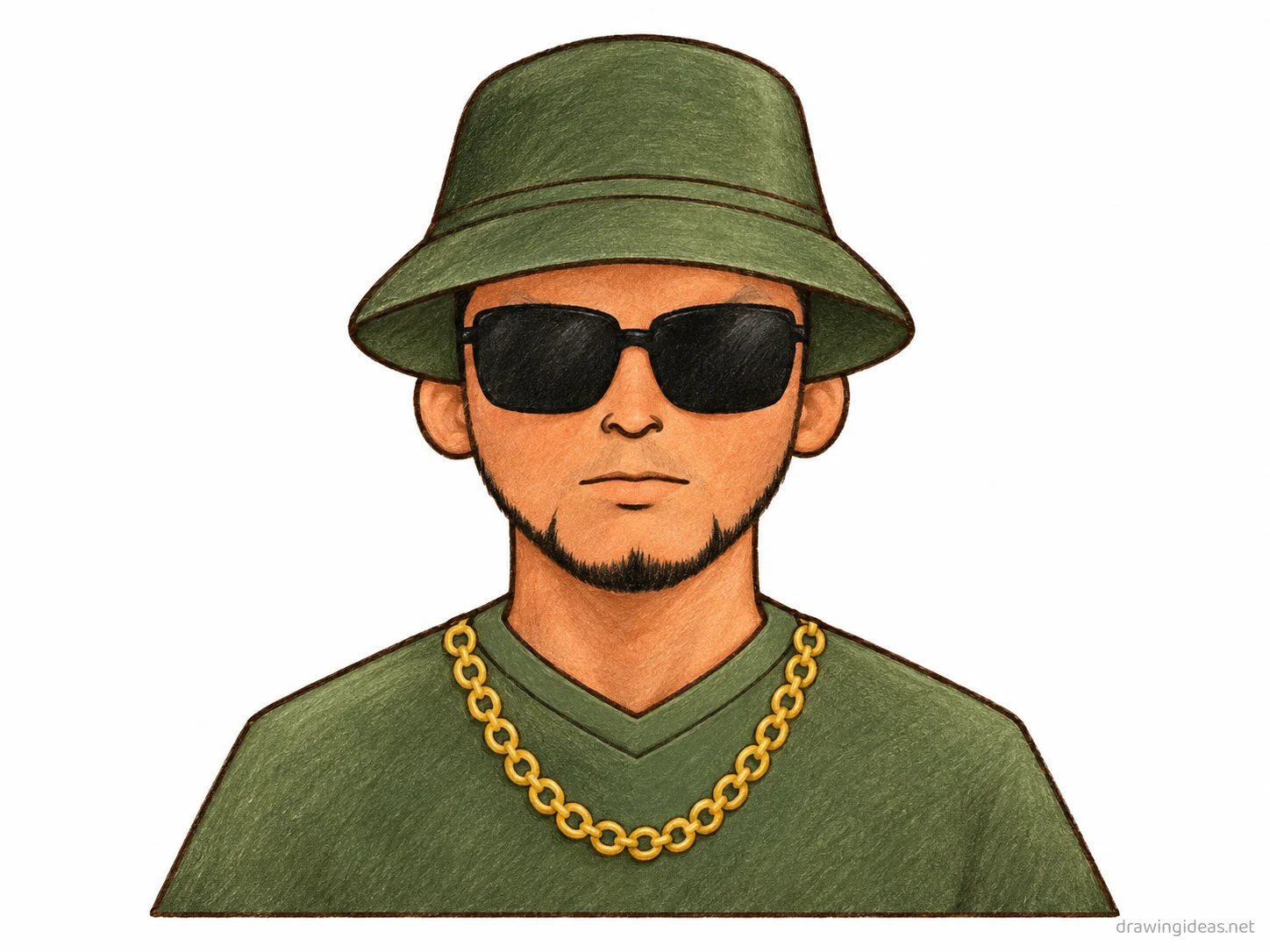
How to Draw Bad Bunny Step by Step
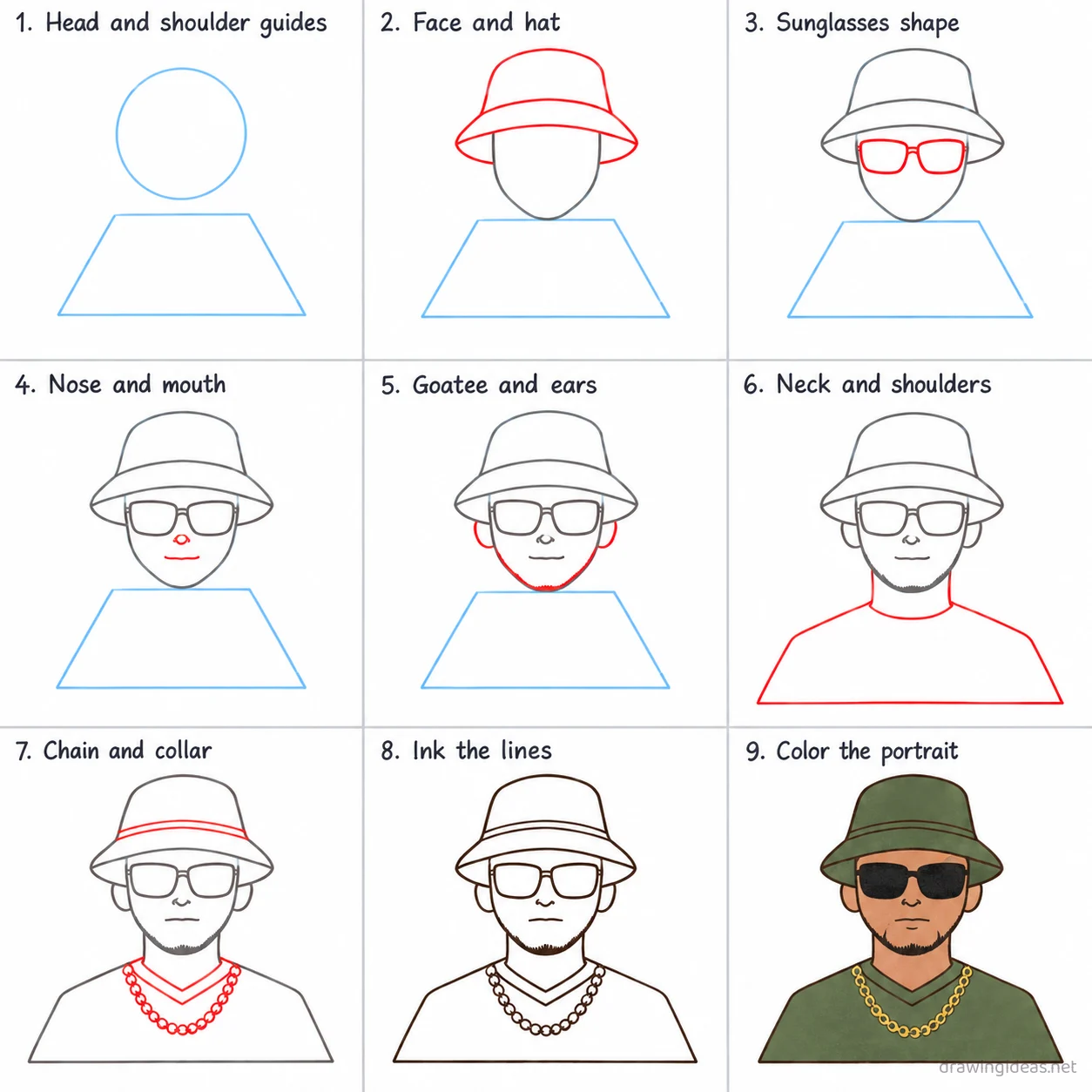
Step 1 of 9
Head and shoulder guides
Draw a light circle for the head in the upper middle of the page, then a wide trapezoid below it for the shoulders.
-
Head and shoulder guides
Draw a light circle for the head in the upper middle of the page, then a wide trapezoid below it for the shoulders.
-
Face and hat
Trace a rounded jaw on the head circle, then add a rounded bucket hat sitting on top of the head.
-
Sunglasses shape
Add two wide rounded lenses connected by a bridge, covering the middle of the face at eye level.
-
Nose and mouth
Add a small rounded nose below the sunglasses, then a short straight mouth with slightly upturned corners.
-
Goatee and ears
Trace a thin trimmed goatee along the jawline, then add a small rounded ear on each side of the head.
-
Neck and shoulders
Add a short neck below the chin, then trace the shoulder outline on the trapezoid guide.
-
Chain and collar
Add a looping chain necklace across the chest, a V-neck collar line, and a thin band around the base of the hat.
-
Ink the lines
Go over every kept line with dark ink, then erase the light head circle and shoulder trapezoid guides.
-
Color the portrait
Fill the skin tan, the hat and shirt olive green, the sunglasses black, and the chain gold.
Bad Bunny Drawing Ideas to Try Next
Once the basic Bad Bunny clicks, run it through these variations — each one practices a different skill while staying on a subject you already know.
-
Bad Bunny in profile silhouette
One side-view outline filled solid black — profile practice with a dramatic result.
-
A cozy bundled-up figure
Big coat, big scarf, small visible face — winter clothing hides anatomy while you practice everything else.
-
A back-view Bad Bunny
No face required: hair, shoulders, and posture carry everything. The most confidence-building people drawing there is.
-
Hands holding something small
A mug, a phone, a flower — drawing hands WITH objects is easier than empty hands, and endlessly useful.
-
A gesture-pose minute study
Set a timer for 60 seconds and capture just the motion line and weight — repeat five times, keep the best.
Tips for Better Bad Bunny Drawings
- Draw the spaces between features, not just the features. The distance from nose to mouth matters more than the nose or the mouth.
- Eyes sit at the vertical middle of the head — everyone places them too high at first. Measure it once on any photo and you’ll never unsee it.
Not feeling Bad Bunny today?
Let the generator pick your next subject — filtered by mood and difficulty.
🎲 Random Drawing GeneratorBad Bunny Drawing FAQ
What is the easiest way to draw Bad Bunny?
Start with a light proportion framework, keeping your lines light. Refine the outline, add the defining details, then erase the construction shapes. The nine-step method above breaks this down — most people get a recognizable Bad Bunny on their very first try with it.
How long should it take to draw Bad Bunny?
A simple Bad Bunny drawing takes about 25 minutes following this tutorial. A quick doodle version can be done in two or three minutes, while a detailed, fully-shaded study might take an hour. Speed comes with repetition — the second attempt is always faster than the first.
What supplies do I need for Bad Bunny drawings?
Just a pencil, an eraser, and any paper. An HB pencil for construction lines and a 2B for final outlines is a nice upgrade, and colored pencils or markers finish it off — but nothing on this page requires special supplies.
Why is drawing Bad Bunny so hard?
Bad Bunny drawings usually go wrong at the proportion stage, not the detail stage. The fix is to spend more time on the basic shapes (steps 1–2) and check them before adding anything else — and use the tip above, which addresses the single most common Bad Bunny mistake.