Treasure Chest Drawing: Step-by-Step Tutorial & Easy Ideas
Want to draw a treasure chest that actually looks right? Start with a dramatic silhouette built on real anatomy and build from there. This page covers the full process — nine steps from first line to finished drawing — followed by treasure chest drawing ideas in every style: easy, cute, realistic, and a few you probably haven't tried.
- Difficulty Medium
- Time ~25 min
- Tools Pencil, eraser, paper
- Starts with a dramatic silhouette built on real anatomy
How to Draw a Treasure Chest Step by Step
Step 1 of 9
Body and lid guides
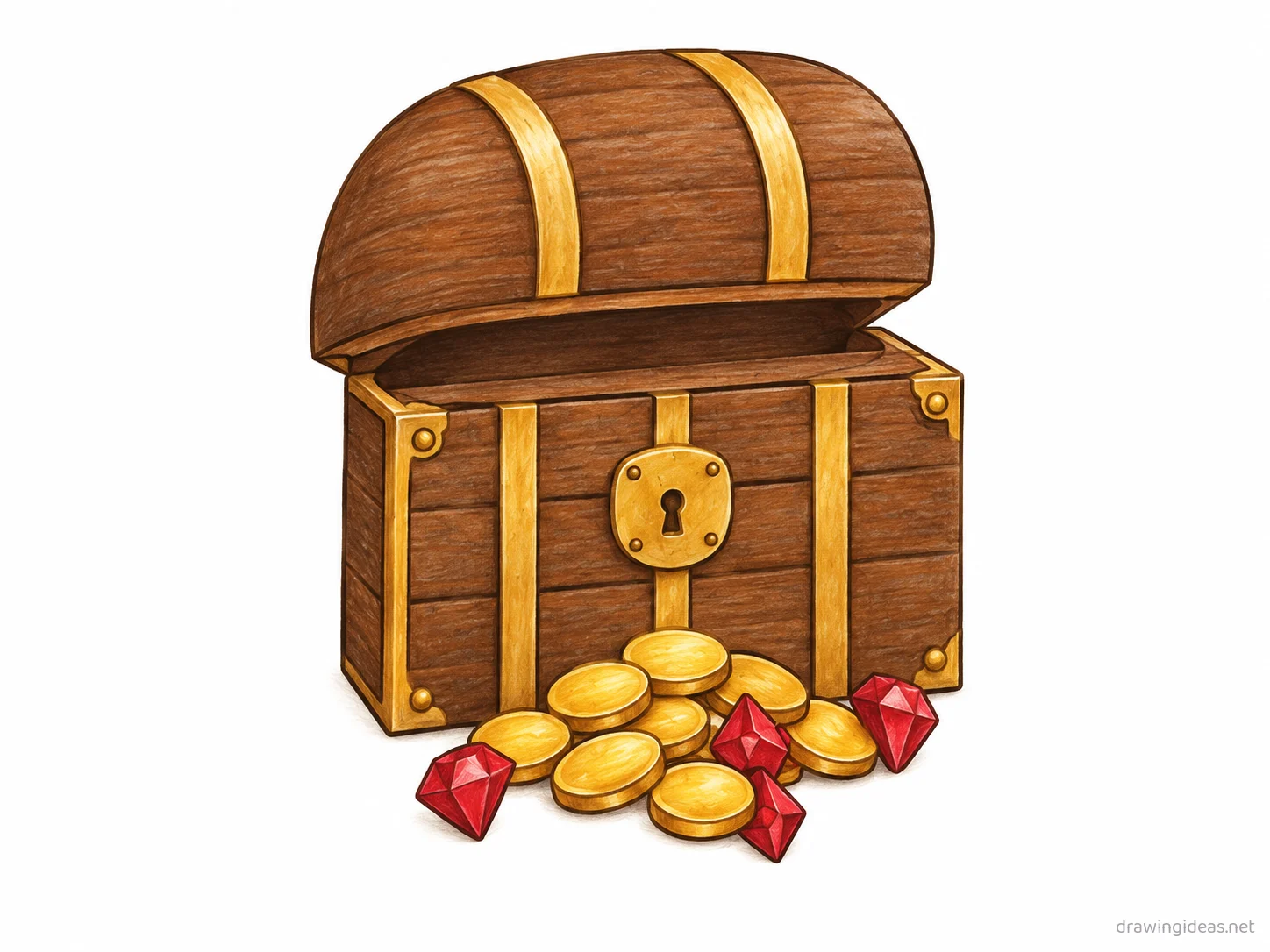
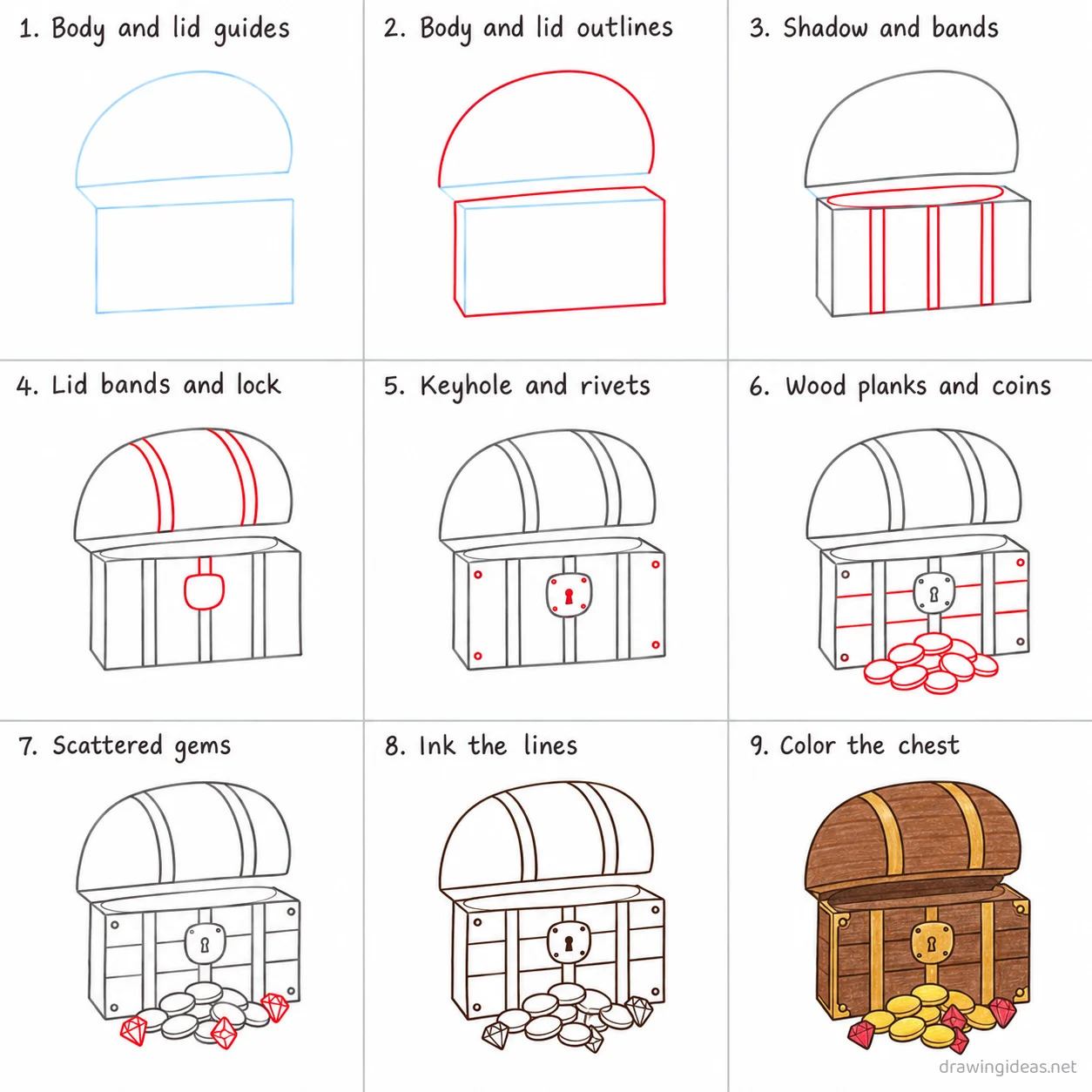
Draw one light rectangle in the lower middle of the page for the chest body, then a light domed half-oval above it for the open lid.
-
Body and lid guides
Draw one light rectangle in the lower middle of the page for the chest body, then a light domed half-oval above it for the open lid.
-
Body and lid outlines
Trace the rectangle guide for a bold chest body, then trace the dome guide for a bold open lid.
-
Shadow and bands
Add one curved line inside the top of the body for the dark hollow, then three vertical metal band stripes down the front.
-
Lid bands and lock
Add two curved metal bands across the lid matching the body, then a small rounded lock plate on the front center of the body.
-
Keyhole and rivets
Add a small keyhole shape in the middle of the lock plate, then eight small rivet dots near the corners and lock.
-
Wood planks and coins
Add three horizontal plank lines across the body, then a pile of overlapping coins spilling over its front edge.
-
Scattered gems
Add a few small faceted gem shapes scattered among the coins.
-
Ink the lines
Go over every kept line with dark ink, then erase the two light body and lid guides.
-
Color the chest
Fill the wood body and lid brown, the metal bands and lock gold, the coins yellow, and the gems bright red.
Treasure Chest Drawing Ideas to Try Next
Once the basic treasure chest clicks, run it through these variations — each one practices a different skill while staying on a subject you already know.
-
Treasure Chest tattoo flash design
Bold outline, limited shading, designed to fit a shoulder — flash style suits fantasy subjects perfectly.
-
A baby treasure chest
Shrink it, enlarge the eyes and head, add one stubby feature — cuteness transforms any fearsome subject.
-
Skeletal or spectral treasure chest
Draw the ghost/bone version with wispy trailing edges — halloween-ready and forgiving of anatomy.
-
A treasure chest guarding treasure
Add a small pile of coins and one glowing gem — the scene writes itself.
-
A tiny treasure chest familiar on a shoulder
Pocket-sized companion version perched on a simple shoulder line.
Tips for Better Treasure Chest Drawings
- Design the silhouette first: fantasy subjects live or die on outline. Fill your sketch with black and check that it still reads.
- Ground the fantasy in real anatomy — borrow joints, weight, and balance from real animals, then exaggerate. Believability comes from the real bones underneath.
Not feeling the treasure chest today?
Let the generator pick your next subject — filtered by mood and difficulty.
🎲 Random Drawing GeneratorTreasure Chest Drawing FAQ
How do you draw a treasure chest easily?
Start with a dramatic silhouette built on real anatomy, keeping your lines light. Refine the outline, add the defining details, then erase the construction shapes. The nine-step method above breaks this down — most people get a recognizable treasure chest on their very first try with it.
How long does a treasure chest drawing take?
A simple treasure chest drawing takes about 25 minutes following this tutorial. A quick doodle version can be done in two or three minutes, while a detailed, fully-shaded study might take an hour. Speed comes with repetition — the second attempt is always faster than the first.
What supplies do I need for treasure chest drawings?
Just a pencil, an eraser, and any paper. An HB pencil for construction lines and a 2B for final outlines is a nice upgrade, and colored pencils or markers finish it off — but nothing on this page requires special supplies.
Can kids draw a treasure chest?
Yes — the treasure chest is very manageable once you use construction shapes, and this method was written for first-timers. Kids can follow the same steps; just expect wobblier lines and more charm.