Race Car Drawing: Step-by-Step Tutorial & Easy Ideas
Learning how to draw a race car is easier than it looks — the whole thing starts with simple boxes for the body with circles for wheels. This guide walks you through a race car drawing in six clear steps, then hands you a set of race car drawing ideas to keep going: easy versions for beginners, cute and cartoon takes, and variations worth sketching when you want more.
- Difficulty Medium
- Time ~20 min
- Tools Pencil, eraser, paper
- Starts with simple boxes for the body with circles for wheels
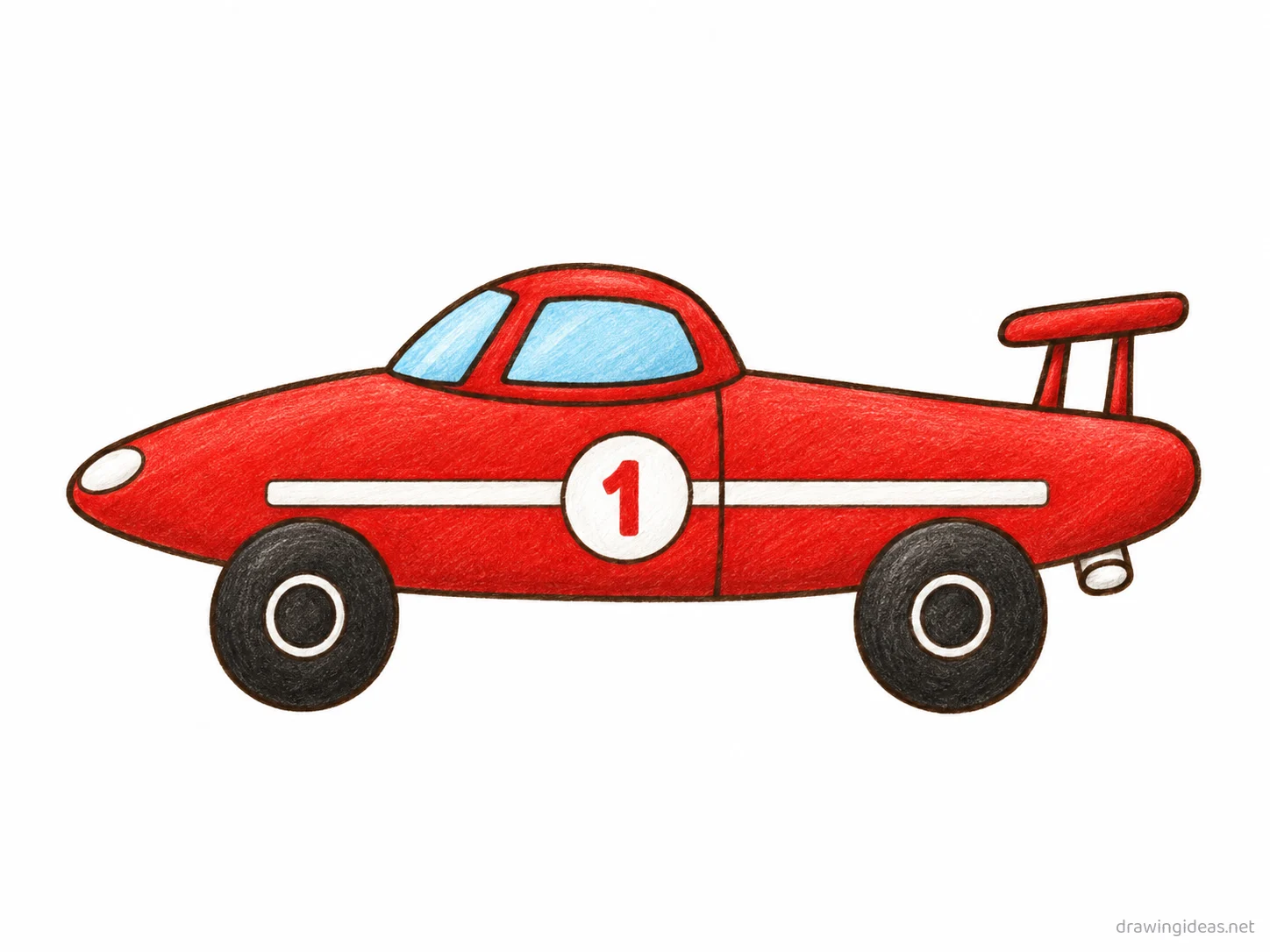
How to Draw a Race Car Step by Step
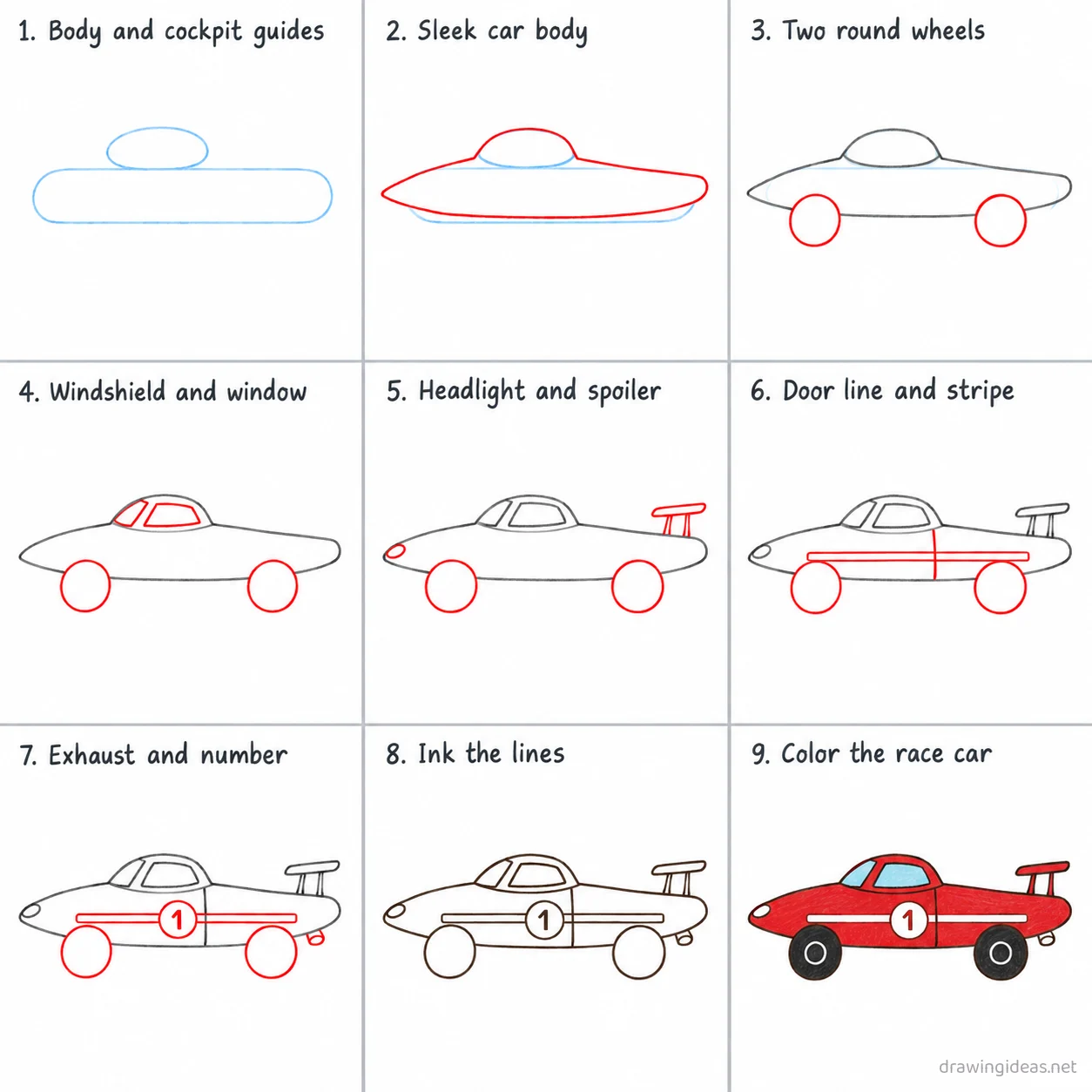
Step 1 of 9
Body and cockpit guides
Draw a long low rounded rectangle in the middle of the page, then a smaller oval on top for the cockpit bump.
-
Body and cockpit guides
Draw a long low rounded rectangle in the middle of the page, then a smaller oval on top for the cockpit bump.
-
Sleek car body
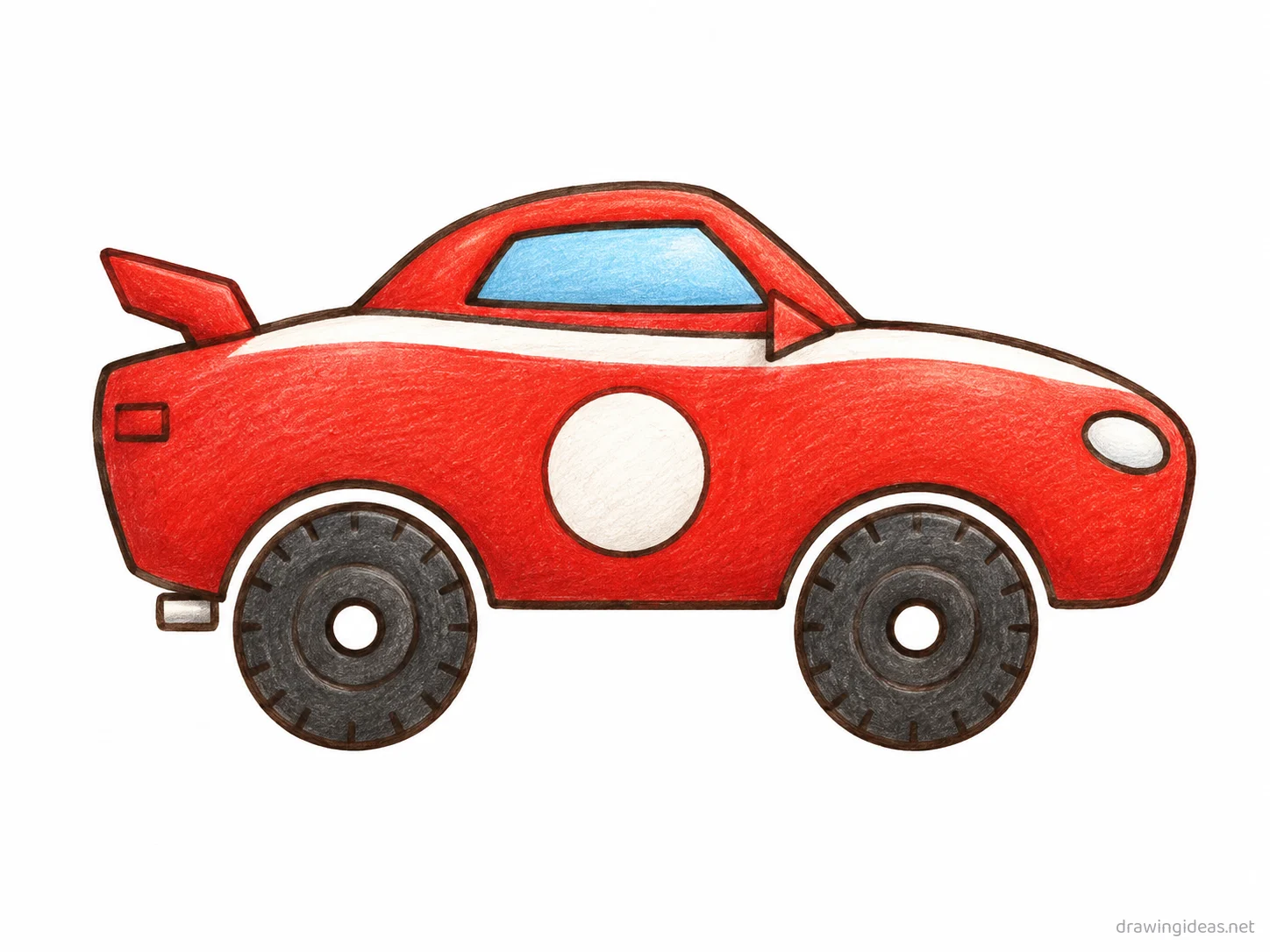
Trace the low body outline with a pointed nose on the left and a tapered tail on the right, then trace a small dome for the cockpit.
-
Two round wheels
Add a round wheel under the front of the body and a matching round wheel under the rear.
-
Windshield and window
Add an angled windshield panel on the front of the cockpit dome, then a side window panel just behind it.
-
Headlight and spoiler
Add a small oval headlight at the nose tip, then a raised rear spoiler on short posts at the tail.
-
Door line and stripe
Add a vertical door seam line on the body, then a long racing stripe running along the middle of the body.
-
Exhaust and number
Add a small exhaust pipe at the rear underside, then a circle over the stripe for a race number.
-
Ink the lines
Go over every kept line with dark ink, then erase the light body and cockpit guide shapes.
-
Color the race car
Fill the body bright red, the wheels black, the windows pale blue, and the stripe and number white.
Race Car Drawing Ideas to Try Next
Once the basic race car clicks, run it through these variations — each one practices a different skill while staying on a subject you already know.
-
A cutaway race car interior
Slice the side off and show seats and cargo — the technical-drawing thrill without the precision.
-
Race Car speeding with motion lines
Tilt it forward, trail speed lines, blur the wheels — energy over accuracy.
-
A cartoon race car with a face
Headlights become eyes, the grille becomes a mouth — instant character, forgiving shapes.
-
A tiny toy version
Squash the proportions, fatten the wheels, round the corners — the die-cast toy look.
-
A rusty abandoned race car
Overgrown, patched with rust, one plant growing through it — texture practice with atmosphere.
Tips for Better Race Car Drawings
- Wheels first, body second: wheel size and spacing define the vehicle’s character more than any body detail.
- Keep panel lines and windows obeying the same perspective as the body — one rebellious line tilts the whole machine.
Not feeling the race car today?
Let the generator pick your next subject — filtered by mood and difficulty.
🎲 Random Drawing GeneratorRace Car Drawing FAQ
How do you draw a race car easily?
Start with simple boxes for the body with circles for wheels, keeping your lines light. Refine the outline, add the defining details, then erase the construction shapes. The nine-step method above breaks this down — most people get a recognizable race car on their very first try with it.
How long should it take to draw a race car?
A simple race car drawing takes about 20 minutes following this tutorial. A quick doodle version can be done in two or three minutes, while a detailed, fully-shaded study might take an hour. Speed comes with repetition — the second attempt is always faster than the first.
What do I need to draw a race car?
Just a pencil, an eraser, and any paper. An HB pencil for construction lines and a 2B for final outlines is a nice upgrade, and colored pencils or markers finish it off — but nothing on this page requires special supplies.
Can kids draw a race car?
Yes — the race car is very manageable once you use construction shapes, and this method was written for first-timers. Kids can follow the same steps; just expect wobblier lines and more charm.