Labubu Drawing: Step-by-Step Tutorial & Easy Ideas
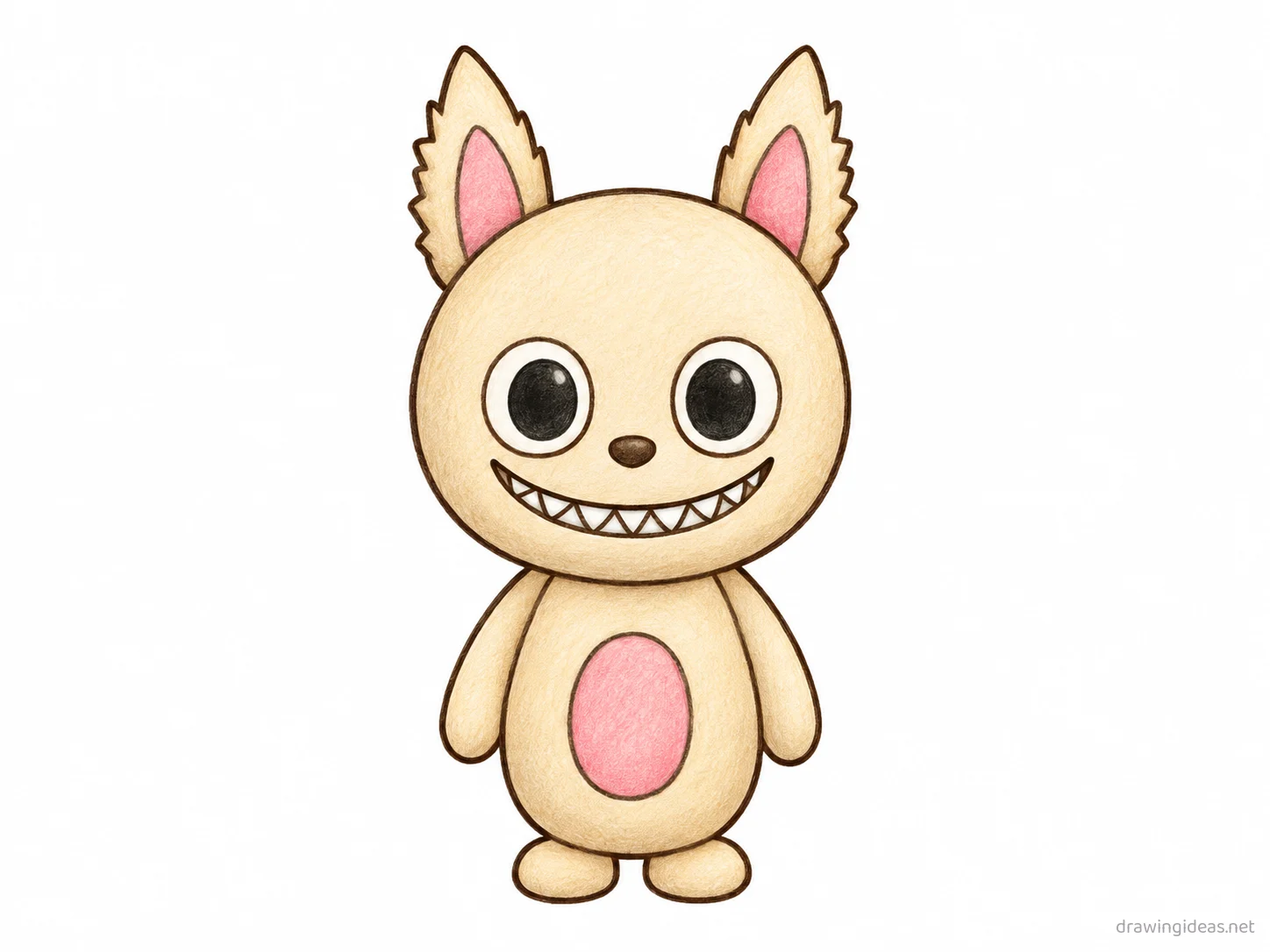
Learning how to draw Labubu is easier than it looks — the whole thing starts with the character’s two or three signature shapes. This guide walks you through a Labubu drawing in six clear steps, then hands you a set of Labubu drawing ideas to keep going: easy versions for beginners, cute and cartoon takes, and variations worth sketching when you want more.
- Difficulty Medium
- Time ~20 min
- Tools Pencil, eraser, paper
- Starts with the character’s two or three signature shapes
How to Draw Labubu Step by Step
Step 1 of 9
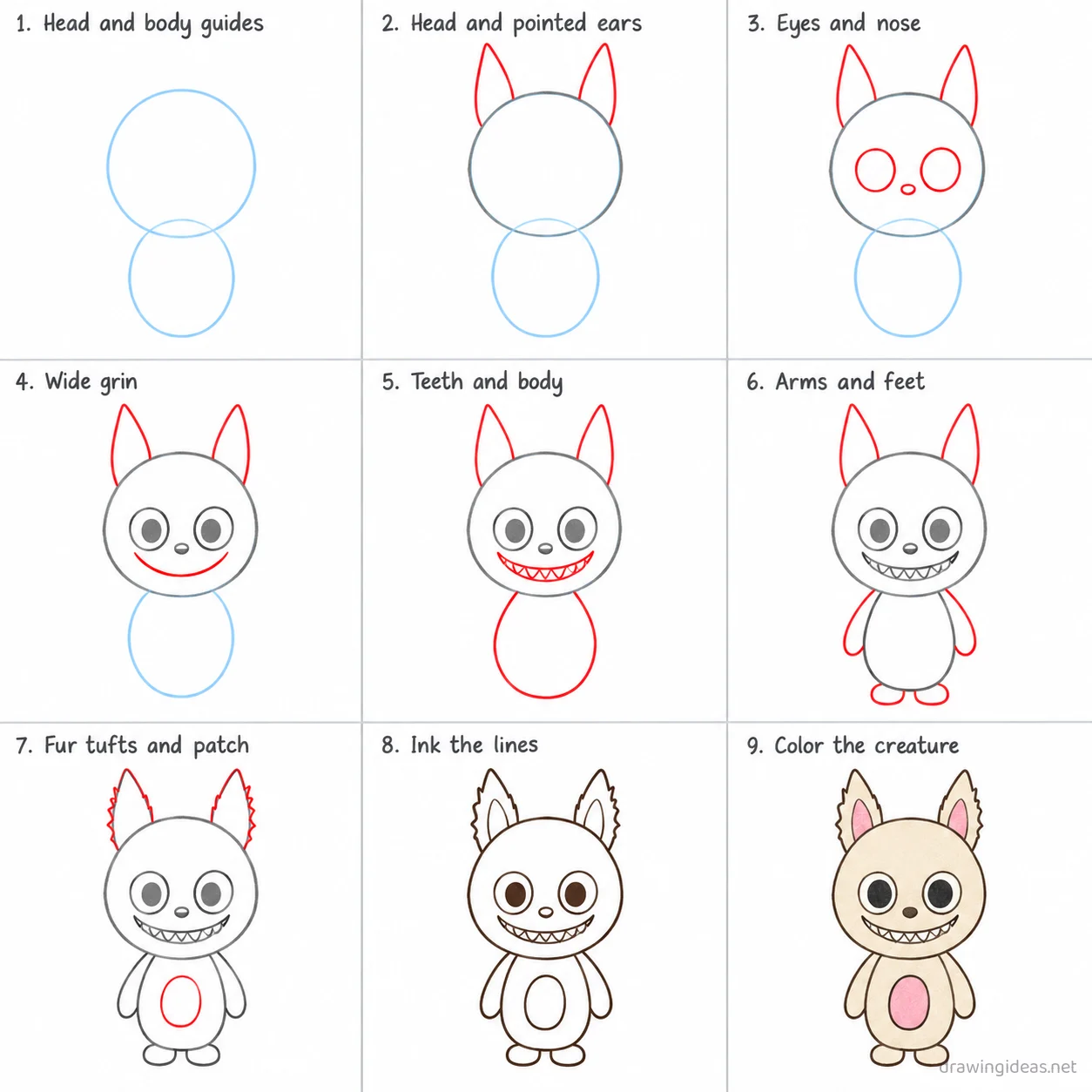
Head and body guides
Draw a large circle for the oversized head in the upper middle of the page, then a small oval below it for the body.
-
Head and body guides
Draw a large circle for the oversized head in the upper middle of the page, then a small oval below it for the body.
-
Head and pointed ears
Trace the head outline, then add two tall pointed ears standing straight up from the top of the head.
-
Eyes and nose
Add two large round eyes across the middle of the face, then a tiny round nose centered just below them.
-
Wide grin
Draw a wide curving grin below the nose, dipping gently at the center.
-
Teeth and body
Add a row of small pointed teeth along the top edge of the grin, then trace the small rounded body below the head.
-
Arms and feet
Add two short rounded arms hanging from the top sides of the body, then two small rounded feet at the bottom.
-
Fur tufts and patch
Add a few zigzag fur tuft marks along the edge of each ear, then a small patch shape on the belly.
-
Ink the lines
Go over every kept line with dark ink, then erase the light head circle and body oval guides.
-
Color the creature
Fill the whole body and head cream, the inner ears and belly patch soft pink, and the eyes solid black.
Labubu Drawing Ideas to Try Next
Once the basic Labubu clicks, run it through these variations — each one practices a different skill while staying on a subject you already know.
-
Chibi Labubu
Two-heads-tall version: giant head, tiny body, maximum cute — the most forgiving fan-art style.
-
Labubu in a different art style
Redraw the character as if another show's artist drew them — a style-study exercise fans love to see.
-
Labubu as a simple icon
Reduce the character to 3–4 shapes that still read instantly — a real design challenge.
-
An expression sheet
The same face six times: happy, angry, shocked, smug, sleepy, crying — how professionals actually practice a character.
-
Labubu doing something mundane
Grocery shopping, waiting for the bus, doing taxes — the comedy of icons in ordinary life.
Tips for Better Labubu Drawings
- Count heads: character proportions are deliberate design choices, and using the wrong head-count is why fan art looks "off" even when every feature is right.
- Likeness lives in the silhouette: if you fill your character drawing with solid black and it’s still recognizable, you’ve nailed it. If not, no amount of interior detail will save it.
Not feeling Labubu today?
Let the generator pick your next subject — filtered by mood and difficulty.
🎲 Random Drawing GeneratorLabubu Drawing FAQ
How do you draw Labubu easily?
Start with the character’s two or three signature shapes, keeping your lines light. Refine the outline, add the defining details, then erase the construction shapes. The nine-step method above breaks this down — most people get a recognizable Labubu on their very first try with it.
How long does Labubu drawing take?
A simple Labubu drawing takes about 20 minutes following this tutorial. A quick doodle version can be done in two or three minutes, while a detailed, fully-shaded study might take an hour. Speed comes with repetition — the second attempt is always faster than the first.
What do I need to draw Labubu?
Just a pencil, an eraser, and any paper. An HB pencil for construction lines and a 2B for final outlines is a nice upgrade, and colored pencils or markers finish it off — but nothing on this page requires special supplies.
Can kids draw Labubu?
Yes — Labubu is very manageable once you use construction shapes, and this method was written for first-timers. Kids can follow the same steps; just expect wobblier lines and more charm.