Government Drawing: Step-by-Step Tutorial & Easy Ideas
Learning how to draw a government is easier than it looks — the whole thing starts with one clear outline divided into labeled regions. This guide walks you through a government drawing in six clear steps, then hands you a set of government drawing ideas to keep going: easy versions for beginners, cute and cartoon takes, and variations worth sketching when you want more.
- Difficulty Medium
- Time ~15 min
- Tools Pencil, eraser, paper
- Starts with one clear outline divided into labeled regions
How to Draw a Government Step by Step
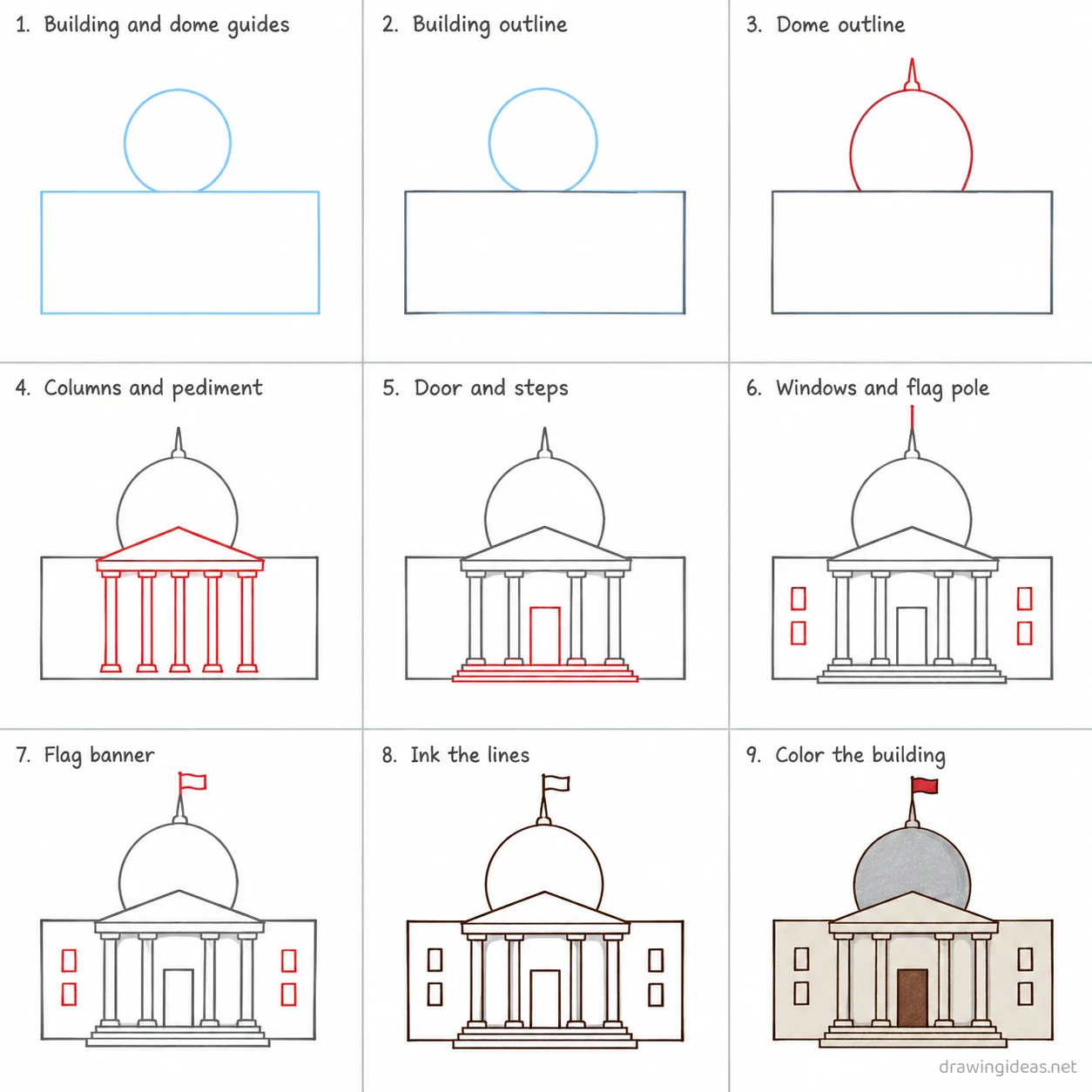
Step 1 of 9
Building and dome guides
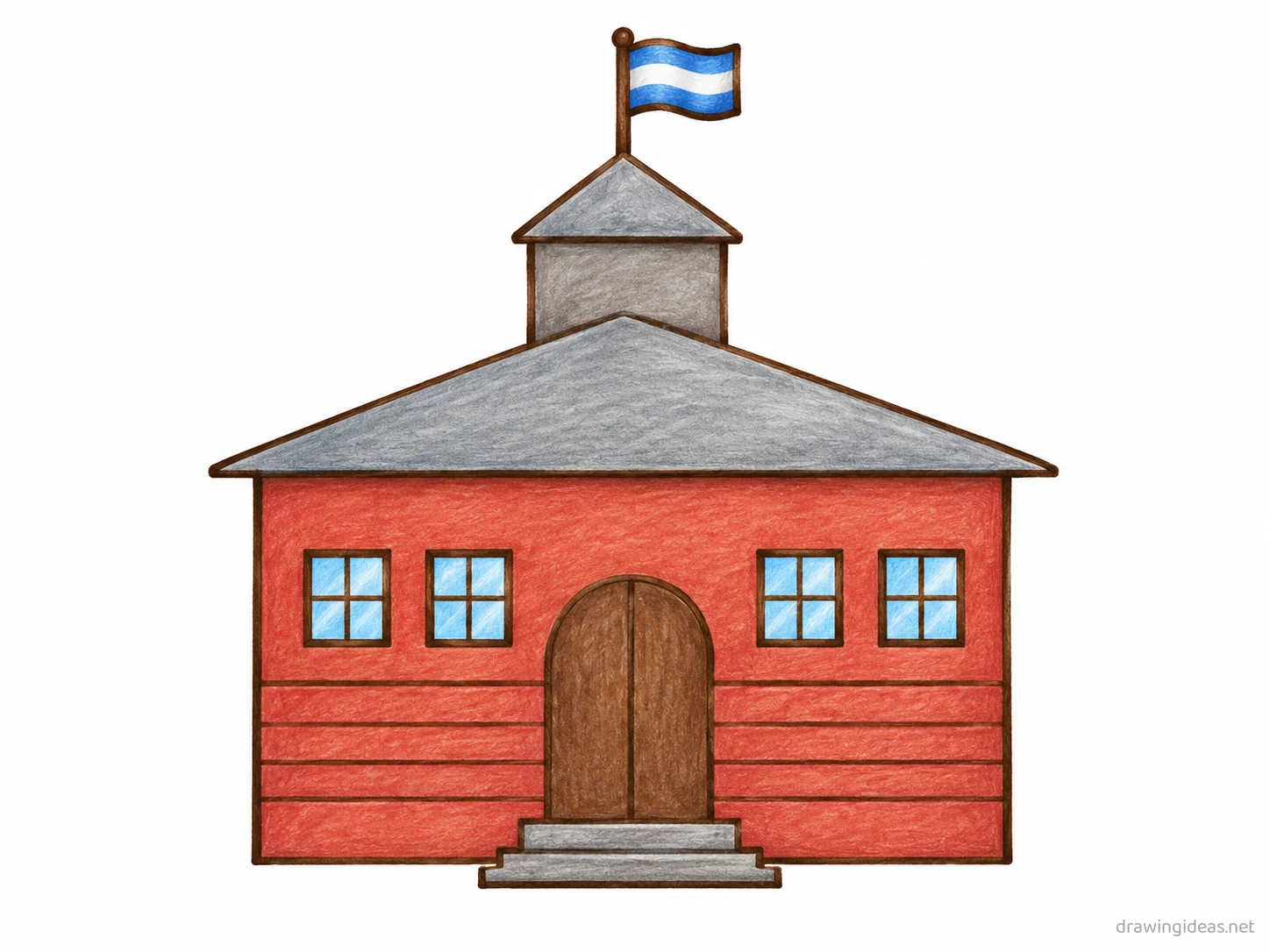
Draw a wide light rectangle in the middle of the page for the building, then a circle above it for the dome.
-
Building and dome guides
Draw a wide light rectangle in the middle of the page for the building, then a circle above it for the dome.
-
Building outline
Trace the rectangular building facade over the guide rectangle.
-
Dome outline
Trace the rounded dome over the guide circle, tapering to a small spire at the very top.
-
Columns and pediment
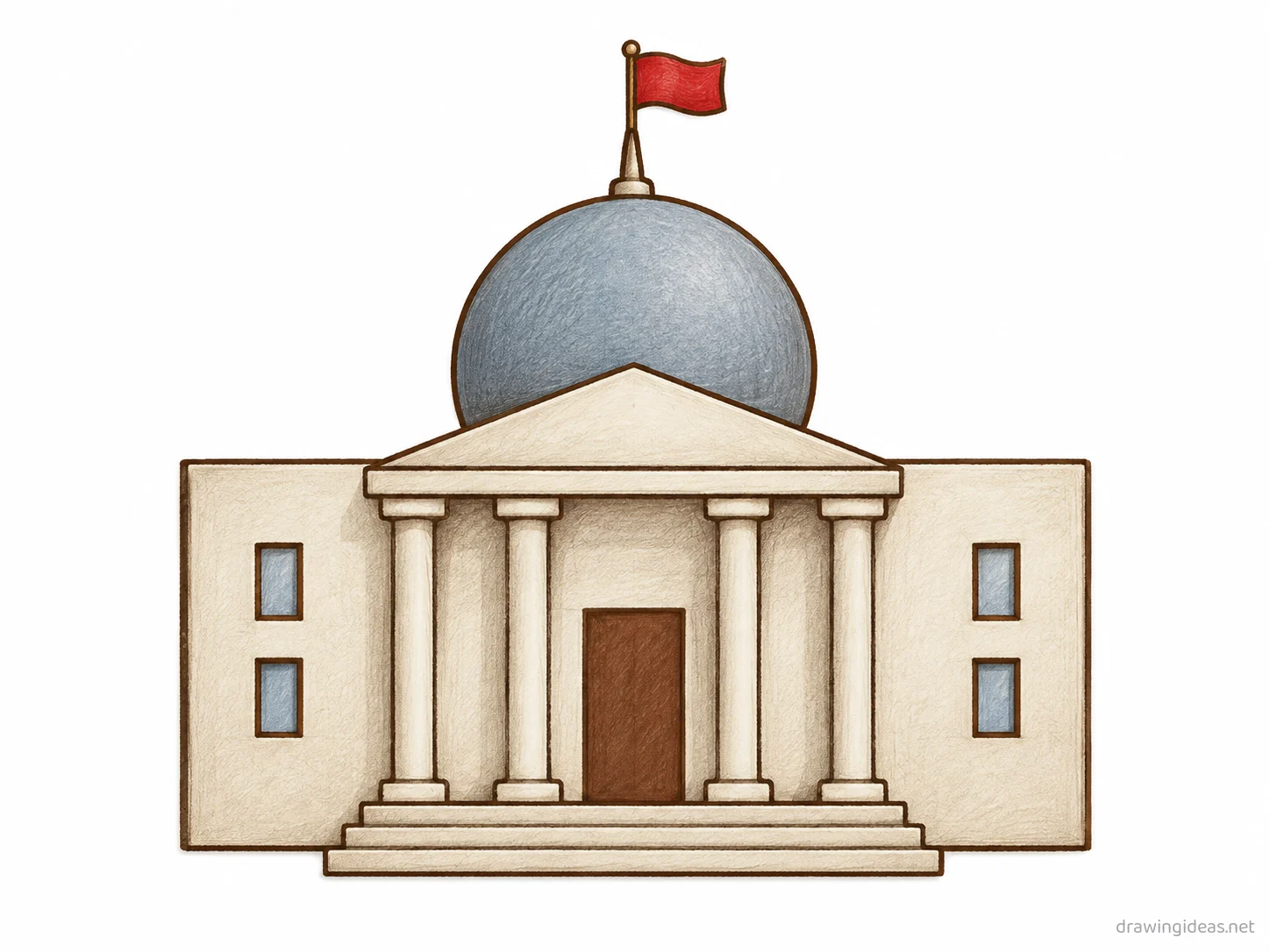
Draw five evenly spaced vertical columns across the front, then a triangular roof above them just below the dome.
-
Door and steps
Add a tall rectangular door centered at the bottom of the building, then three step lines in front of it.
-
Windows and flag pole
Add two small windows stacked on the left side, two matching windows on the right, and a thin flag pole rising from the dome.
-
Flag banner
Add a small rectangular flag at the top of the pole.
-
Ink the lines
Go over every kept line with dark ink, then erase the light building and dome guide shapes.
-
Color the building
Fill the building pale stone gray, the dome a darker gray, the door warm brown, and the flag red.
Government Drawing Ideas to Try Next
Once the basic government clicks, run it through these variations — each one practices a different skill while staying on a subject you already know.
-
A labeled diagram of the government
The classic homework version: clean outline, distinct regions, straight pointer lines to printed labels.
-
A step-by-step process strip
Show the government in stages across three or four panels, with arrows — perfect for processes and cycles.
-
Government as a friendly cartoon
Give it eyes and a smile — the memorable-mnemonic style that makes studying stick.
-
A poster-style government with title lettering
Big title, the government center-stage, two or three fact callouts — the class-project format.
Tips for Better Government Drawings
- Label lines should never cross each other — plan label positions around the drawing before writing any text.
- Accuracy first: check a textbook diagram before you stylize. A beautiful but wrong diagram loses marks and teaches nothing.
Not feeling the government today?
Let the generator pick your next subject — filtered by mood and difficulty.
🎲 Random Drawing GeneratorGovernment Drawing FAQ
What is the easiest way to draw a government?
Start with one clear outline divided into labeled regions, keeping your lines light. Refine the outline, add the defining details, then erase the construction shapes. The nine-step method above breaks this down — most people get a recognizable government on their very first try with it.
How long should it take to draw a government?
A simple government drawing takes about 15 minutes following this tutorial. A quick doodle version can be done in two or three minutes, while a detailed, fully-shaded study might take an hour. Speed comes with repetition — the second attempt is always faster than the first.
What do I need to draw a government?
Just a pencil, an eraser, and any paper. An HB pencil for construction lines and a 2B for final outlines is a nice upgrade, and colored pencils or markers finish it off — but nothing on this page requires special supplies.
Is a government easy to draw for beginners?
Yes — the government is very manageable once you use construction shapes, and this method was written for first-timers. Kids can follow the same steps; just expect wobblier lines and more charm.