Cat Paw Drawing: Step-by-Step Tutorial & Easy Ideas
Every good cat paw drawing starts the same way: a circle for the head and an oval for the body, refined step by step into a finished piece. Below you'll find a complete step-by-step tutorial you can follow with any pencil and paper, plus easy cat paw drawing ideas — from quick five-minute doodles to more detailed studies.
- Difficulty Easy
- Time ~15 min
- Tools Pencil, eraser, paper
- Starts with a circle for the head and an oval for the body
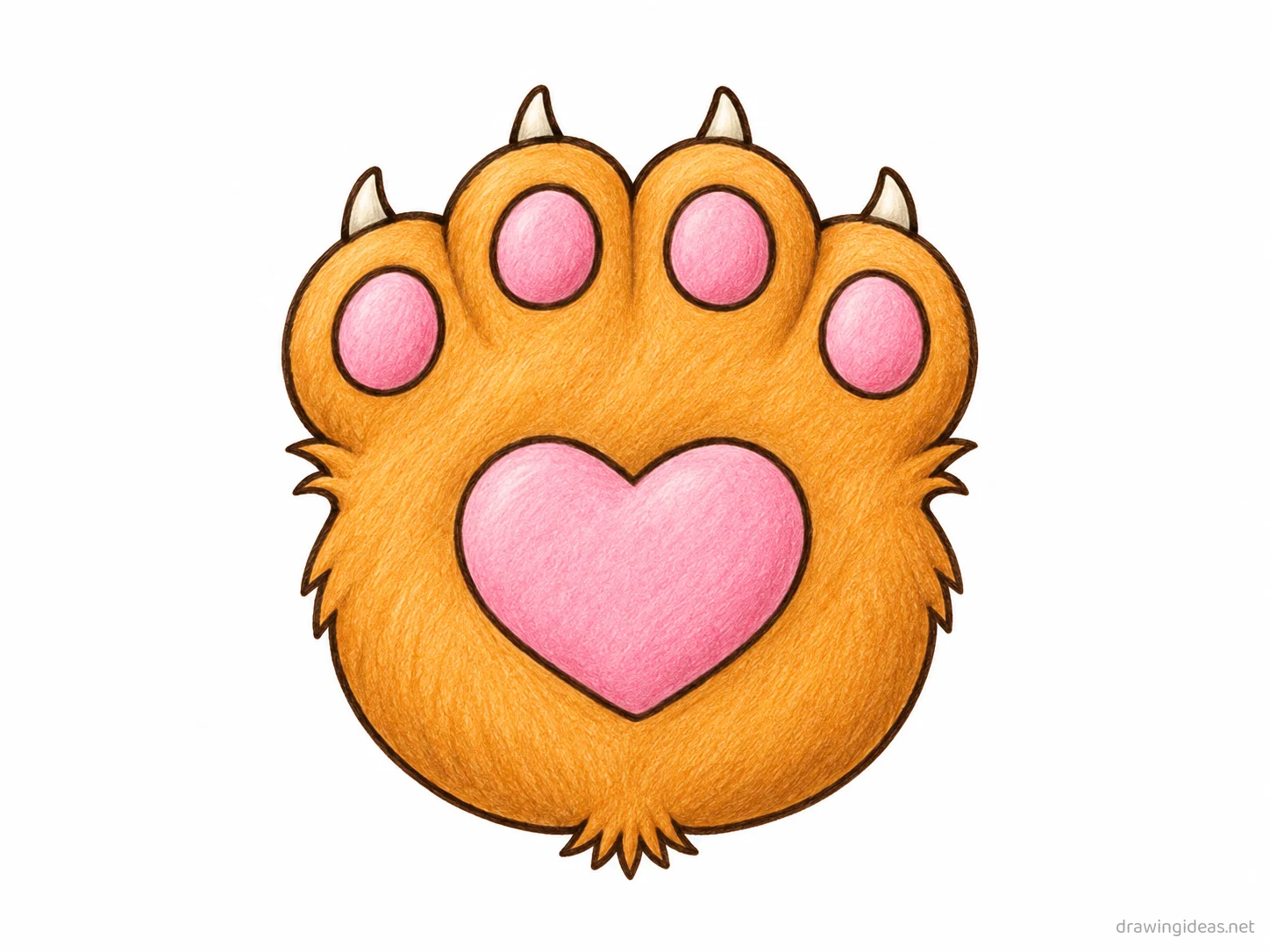
How to Draw a Cat Paw Step by Step
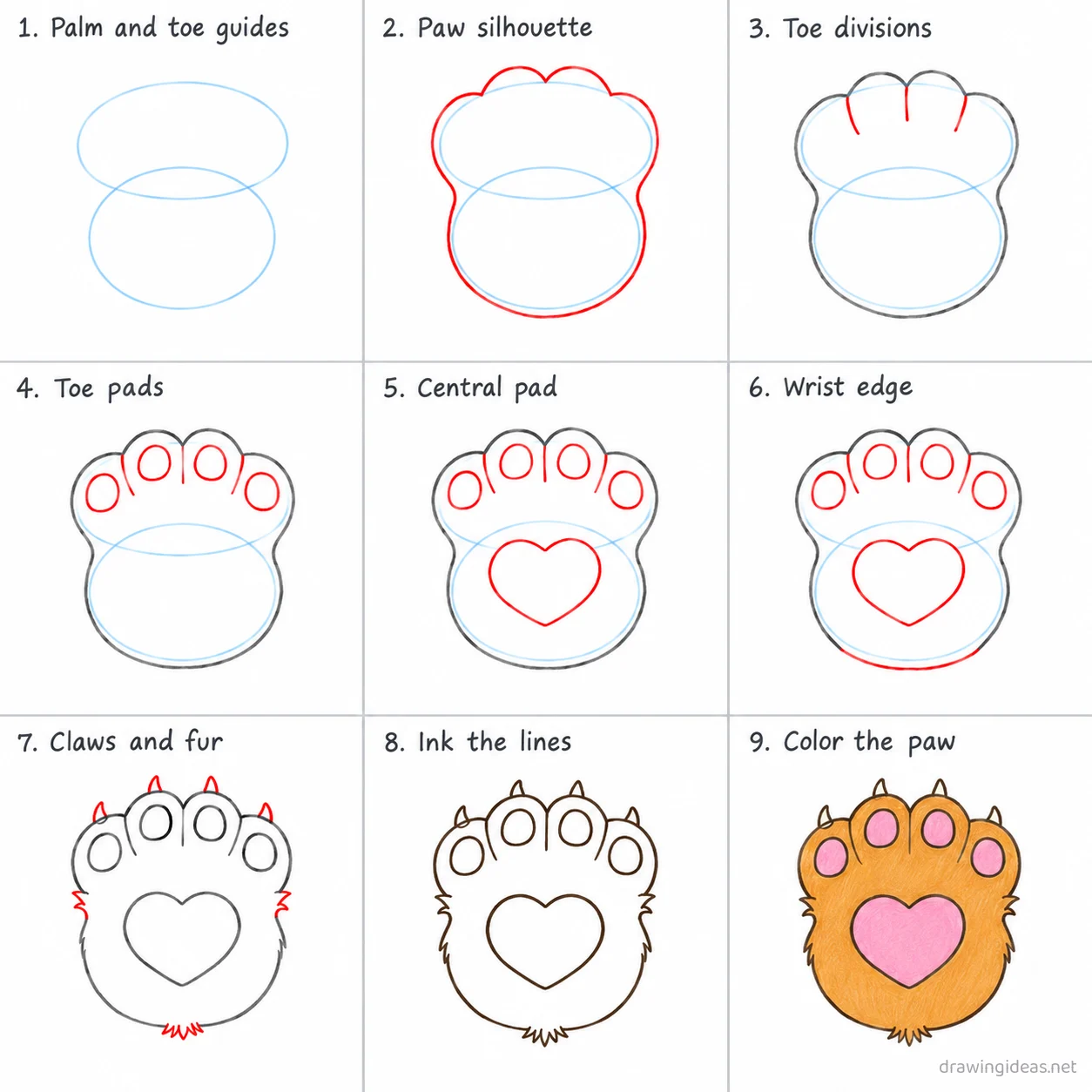
Step 1 of 9
Palm and toe guides
Draw a light oval for the palm in the lower middle of the page, then a wider light oval above it for the toe area, overlapping slightly.
-
Palm and toe guides
Draw a light oval for the palm in the lower middle of the page, then a wider light oval above it for the toe area, overlapping slightly.
-
Paw silhouette
Trace the whole paw shape across both guides, four rounded bumps along the top flowing into the rounded palm below.
-
Toe divisions
Add three short curved lines separating the four toe bumps from each other.
-
Toe pads
Draw a small rounded pad shape centered inside each of the four toe bumps.
-
Central pad
Add one large heart-shaped pad in the middle of the palm, below the toes.
-
Wrist edge
Close the bottom of the palm with a gently curved wrist line.
-
Claws and fur
Add a tiny curved claw tip poking out above each toe pad, then a few short fur tufts along the outer edges of the palm.
-
Ink the lines
Go over every kept line with dark ink, then erase the light palm and toe guide ovals.
-
Color the paw
Fill the fur orange, the pads pink, and the claws off-white.
Cat Paw Drawing Ideas to Try Next
Once the basic cat paw clicks, run it through these variations — each one practices a different skill while staying on a subject you already know.
-
Cat Paw face close-up portrait
Crop to just the face and make the eyes the star. Big expressive eyes carry the whole piece.
-
A cat paw peeking around a corner
Half the animal hides behind an edge — you draw the easy half and the composition feels playful.
-
A cat paw in its natural habitat
Add two or three environment elements behind your cat paw — the scene sells the story without needing a full background.
-
A cartoon cat paw with a tiny accessory
Round everything, shrink the body, add one hat/bow/scarf. Accessories add personality for nearly zero extra difficulty.
-
A sleeping cat paw curled up
Sleeping poses tuck away the legs and face details — draw one restful curve and let the pose forgive the anatomy.
-
Continuous one-line cat paw
Draw the whole cat paw without lifting your pen. Great warm-up, and the wobbles are the style.
-
A baby cat paw next to its parent
Same drawing twice at two sizes with bigger eyes on the little one — instant "aww" with skills you already have.
-
A geometric low-poly cat paw
Build the cat paw from straight-edged triangles only — a modern design look that secretly teaches structure.
Tips for Better Cat Paw Drawings
- Compare proportions to something you know: how many heads long is the body? Where do the legs attach? Two measurements taken early save twenty corrections later.
- Draw the gesture line first — one curve through the spine from nose to tail. Animals drawn from the spine out always feel alive; animals drawn from the outline in always feel stuffed.
Not feeling the cat paw today?
Let the generator pick your next subject — filtered by mood and difficulty.
🎲 Random Drawing GeneratorCat Paw Drawing FAQ
How do you draw a cat paw easily?
Start with a circle for the head and an oval for the body, keeping your lines light. Refine the outline, add the defining details, then erase the construction shapes. The nine-step method above breaks this down — most people get a recognizable cat paw on their very first try with it.
How long should it take to draw a cat paw?
A simple cat paw drawing takes about 15 minutes following this tutorial. A quick doodle version can be done in two or three minutes, while a detailed, fully-shaded study might take an hour. Speed comes with repetition — the second attempt is always faster than the first.
What supplies do I need for cat paw drawings?
Just a pencil, an eraser, and any paper. An HB pencil for construction lines and a 2B for final outlines is a nice upgrade, and colored pencils or markers finish it off — but nothing on this page requires special supplies.
Can kids draw a cat paw?
Yes — the cat paw is one of the friendlier subjects for beginners, and this method was written for first-timers. Kids can follow the same steps; just expect wobblier lines and more charm.